Table of Contents
ToggleAzaleas are the workhorse shrubs of front-yard landscaping, they deliver reliable spring color, require no pruning to look full, and thrive in most climates when planted correctly. Whether you’re starting from scratch or refreshing an existing landscape, azaleas solve the problem that stumps many DIYers: how to get dependable seasonal blooms without constant fussing. This guide walks you through everything from soil prep to seasonal care, so you can plant azaleas that flourish for decades.
Key Takeaways
- Azalea front yard landscaping delivers reliable spring blooms in pink, red, white, purple, and coral for 3–4 weeks without requiring constant pruning or maintenance.
- Choose azalea varieties matched to your USDA hardiness zone—deciduous hybrids for zones 4–6, mixed types for zones 6–8, and Southern Indian or Satsuki hybrids for zones 8–9.
- Azaleas require acidic soil (pH 4.5–6.0) and dappled morning sun with afternoon shade; prepare planting sites with 40% compost or bark to improve drainage and soil acidity.
- Water azaleas 1–1.5 inches weekly during establishment and maintain 2–3 inches of mulch to retain moisture and prevent fungal issues while avoiding overhead watering.
- Create visual impact by grouping three to five azaleas together and layering early, mid-season, and late blooming varieties to extend color from 8 to 12 weeks across your landscape.
- Established azaleas deliver 20+ years of dependable color with minimal ongoing care when fundamentals like variety selection, soil pH, light, and consistent moisture are addressed correctly.
Why Azaleas Make the Perfect Front Yard Choice
Azaleas tick nearly every box for front-yard success. They flower reliably for 3–4 weeks in spring, come in pink, red, white, purple, and coral varieties, and max out between 3–6 feet tall depending on the cultivar, low enough not to block windows, tall enough to anchor a landscape bed.
They’re also forgiving. Unlike some ornamentals that sulk in partial shade or demand fussy pruning, azaleas perform well in dappled light beneath deciduous trees, require minimal deadheading, and develop a naturally mounded shape without intervention. They’re also pest-resistant compared to boxwoods or hydrangeas, which can attract spider mites or scale insects. Because azaleas are shallow-rooted and fibrous, they establish quickly after planting, you’ll see significant blooms by year two.
Selecting the Right Azalea Varieties for Your Climate
Before you buy a single plant, confirm your hardiness zone. Azaleas range from USDA zones 4–9, so a late-spring frost in zone 5 could kill a tender zone 7 cultivar. Check your zone at the USDA hardiness map, then cross-reference it against nursery tags.
Northern gardeners (zones 4–6) should prioritize Deciduous hybrids like Exbury or Knaphills, which tolerate sub-zero winters. Mid-Atlantic and mid-South (zones 6–8) have the most variety and can grow both deciduous and evergreen types. Warmer zones (8–9) do better with Southern Indian or Satsuki hybrids, which tolerate heat and humidity without burning.
home decor and gardening resources like The Spruce for detailed varietal comparisons and blooming times in your zone. Matching the plant to your climate prevents the heartbreak of watching a prized specimen decline after the first harsh winter.
Deciduous vs. Evergreen Azaleas
Deciduous azaleas drop their leaves in fall, offering fiery autumn color and better cold hardiness (often to zone 4). Their blooms are typically larger and more fragrant. They’re the safer choice if you’re in a colder climate or want dramatic seasonal change.
Evergreen azaleas retain foliage year-round, providing winter structure and color. They’re usually more compact and flower in lighter pastels. Evergreens suit zones 7 and warmer but can winterburn if exposed to harsh wind and sun without shelter. Many front-yard landscapes mix both types, deciduous for height and scent, evergreens for backbone.
Planting Azaleas: Soil Preparation and Site Selection
Azaleas are acid-loving plants that demand soil pH between 4.5–6.0. If your soil is neutral or alkaline, they’ll chlorose (yellow leaves with green veins) and decline. A simple soil test kit from any garden center reveals your pH: if you’re above 6.5, amend heavily with sulfur or peat moss to lower it, or plant in a dedicated raised bed.
Site selection matters equally. Azaleas prefer dappled morning sun with afternoon shade, about 4–6 hours of direct light. Full sun in hot climates (zones 8–9) can scorch blooms. Full shade reduces flowering. A spot under a high, deciduous tree is ideal: dappled sun in spring when the tree leafs out, but full light while azaleas are blooming.
Dig a hole 1.5 times the width and same depth as the root ball. Amend native soil with 40% compost or aged bark to improve drainage and acidity. Azaleas are shallow-rooted and can’t tolerate standing water, if your drainage is poor, build a raised bed 8–12 inches high and backfill with amended soil. Set the azalea so the top of the root ball is level with the ground (never buried deeper). Water thoroughly and apply 2–3 inches of pine-bark mulch around the base, keeping it 2 inches clear of the stem to prevent rot.
Acclimate container azaleas by setting them in dappled shade for a few days before planting: this prevents transplant shock. Most home gardeners plant in fall (September–October) or early spring (March–April) when soil is moist and mild.
Essential Care and Maintenance Throughout the Seasons
Spring is when azaleas shine. Once flowering fades, remove dead flowers by hand (deadheading prolongs bloom longevity on some cultivars but isn’t essential). Water deeply if spring is dry, azaleas need 1–1.5 inches weekly during establishment (first 2 years). Avoid overhead watering, which can promote fungal leaf spots: soak the root zone instead.
Summer demands consistency. Keep soil evenly moist but never soggy. Reapply mulch if it’s compacted down, maintaining that 2–3 inch layer. Avoid fertilizing after June: late-season feeding promotes tender new growth vulnerable to frost.
Fall is the second-most important season. Mulch evergreens with an extra inch to insulate roots going into winter. Avoid pruning after August, it stimulates new growth that freezes. Water through autumn if rainfall is light: dormant plants still need moisture.
Winter is a dormancy period. No watering, no fertilizing. In zones 4–6, consider a burlap wrap around young plants if they face harsh wind and full sun exposure, this prevents desiccation. Older, established plants rarely need winter protection.
Fertilizing is minimal. Azaleas are slow feeders. Apply an acid-formulated azalea fertilizer (look for labels listing micronutrients like iron and manganese) in early spring before bloom, then again after flowering stops. Follow package directions strictly: over-feeding causes weak growth and fewer blooms. Many established azaleas need no fertilizer if planted in amended soil with good mulch.
Design Ideas: Creating a Stunning Azalea Front Yard
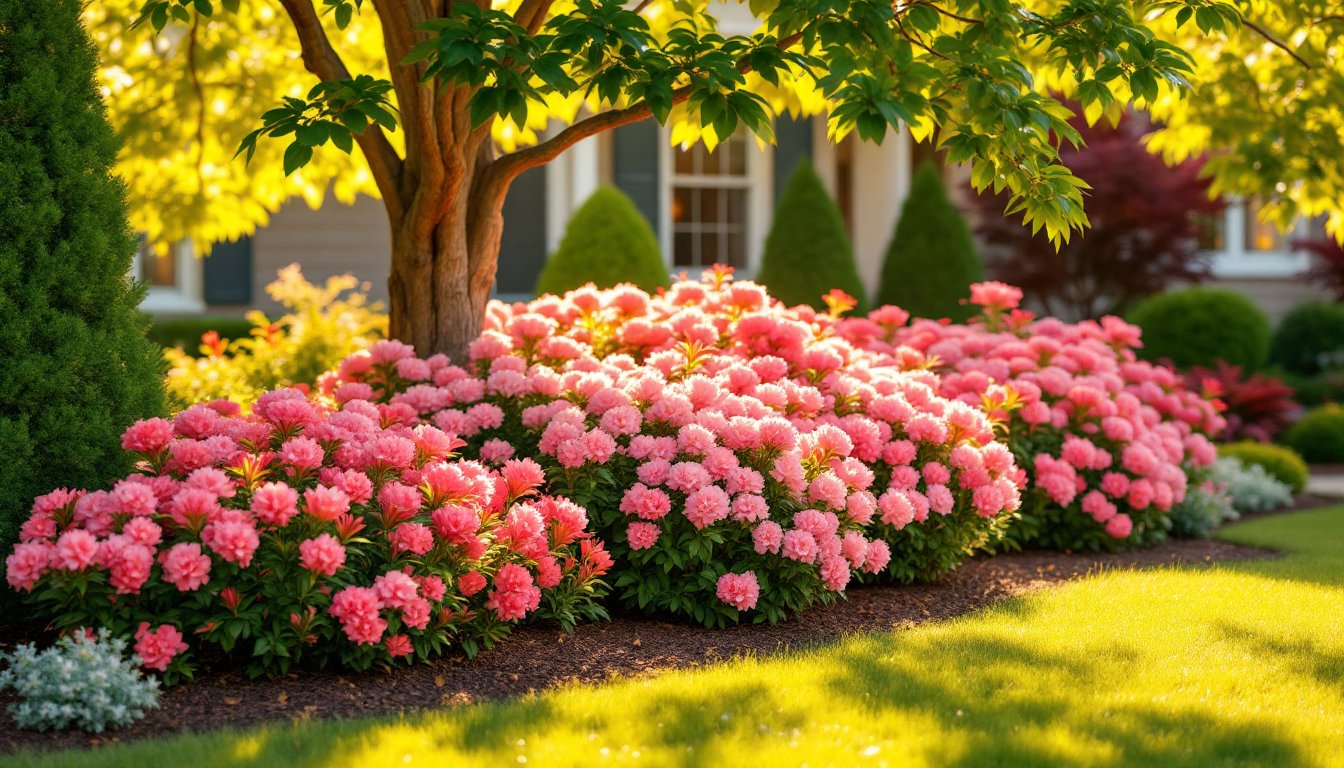
A single specimen azalea is nice, but a mass planting creates impact. Group three to five azaleas of the same variety 3–4 feet apart (they’ll knit together as they mature) for a bold late-spring statement. Layer them with complementary plants: pair pink azaleas with silvery dusty miller or pale yellow creeping jenny for color contrast.
Consider layering different bloom times. Plant early bloomers (February–March) like ‘PJM’ alongside mid-season types (April) like ‘Rosy Lights,’ then late bloomers (May) such as ‘White Rosebud’ to extend flowering from 8 weeks into 12. Repeat this sequence across your front yard for a rolling wave of color.
For design inspiration, explore landscape design ideas that showcase outdoor transformation to understand how shrub plantings anchor the overall composition. A well-designed azalea bed becomes the focal point that ties house color, walkway width, and backdrop plantings into a cohesive whole.
Evergreen companion plants like boxwoods, hollies, or Japanese maples add winter structure after azalea leaves drop. Underplant with shade-tolerant groundcovers, hellebores, liriope, or creeping phlox, to fill the gap between azalea skirts and the soil, reducing weeding. Resources like Country Living’s gardening guides offer more ideas for integrating azaleas into mixed borders and cottage-style landscapes.
Keep bed edges clean with a sharp spade. Mulched beds adjacent to turf tend to blur into the lawn, so maintain a crisp line, it costs nothing but makes everything look intentional. Add accent lighting (solar uplights or low LED spotlights) to highlight azaleas at night during peak bloom.
Conclusion
Azaleas transform a plain front yard into a spring showcase with minimal upkeep once established. Nail the basics, right variety for your zone, acidic soil, dappled sun, and consistent moisture, and you’ll grow shrubs that give you 20+ years of reliable color. There’s no magic formula, just honest prep work and seasonal attention. Your neighbor will ask where you got the secret.