Table of Contents
ToggleA well-designed chicken coop goes beyond just housing your birds, it sets the tone for your entire backyard. Smart backyard chicken coop landscaping improves daily management, protects your flock from predators, and makes egg collection feel less like a chore and more like checking on your garden. Whether you’re working with a small urban setup or a sprawling suburban lot, thoughtful landscaping around your coop enhances both function and curb appeal. The difference between a bare coop area and a properly landscaped one often comes down to a few key design choices: shade placement, ground cover selection, and hardscape planning. This guide walks you through practical landscaping strategies that work with your flock’s needs, not against them.
Key Takeaways
- Strategic backyard chicken coop landscaping improves bird welfare, extends coop longevity, and protects your investment from water damage and rot.
- Position your coop to receive morning sun for drying bedding and afternoon shade to prevent heat stress, ideally using deciduous trees or 30% shade cloth.
- Create dedicated dust-bathing areas with food-grade diatomaceous earth and sand to control parasites, and plant safe forage options like clover, alfalfa, and hardy perennials around your run.
- Install hardscaping features such as gravel pathways, hardware cloth predator barriers buried 12 inches deep, and a compost pad to maintain drainage, reduce mud, and deter predators.
- Use budget-friendly materials like straw bales ($4–8), free woodchips from tree services, and recycled pavers to create a functional, attractive coop landscape without professional costs.
Why Landscaping Your Chicken Coop Matters
Landscaping around your coop isn’t cosmetic, it directly impacts bird welfare, coop longevity, and your own maintenance routine. Chickens need shade in summer to prevent heat stress, especially in breeds with thick feathering. Bare ground around the coop compacts quickly, turns to mud in wet weather, and becomes a breeding ground for parasites. Strategic plantings provide natural food sources (bugs, greens), dust-bathing areas, and perches that mimic their natural behavior.
A properly landscaped coop area also protects your investment. Mulch and ground cover reduce water pooling against the coop’s foundation, which extends wood life and prevents rot. Hardscaping elements, pathways, gravel zones, keep your boots dry and make predator inspection routes clearer. Plus, deliberate landscaping signals to neighbors that this is a managed space, not a makeshift backyard eyesore. Your coop becomes part of your yard’s overall aesthetic rather than something to hide.
Creating a Functional Layout for Your Coop Area
Positioning and Shade Considerations
Before you place a single plant, understand your coop’s sun exposure throughout the day. Morning sun dries damp bedding and helps prevent illness: afternoon shade (especially 2–4 p.m. in summer) keeps birds comfortable. Ideally, position your coop to catch morning light and receive afternoon shade from deciduous trees or shade structures. A 30% shade cloth over the run works well where tree coverage is sparse.
Consider your access paths, too. You’ll visit multiple times daily to collect eggs, refill water, and check on birds. A direct, well-drained path from your house or main living area to the coop saves frustration. If the ground slopes, work with gravity rather than against it, place the coop on higher ground to prevent water runoff pooling near the foundation. Chickens also appreciate a slightly elevated run: it provides natural drainage and deters some ground predators. Calculate your run size based on breed (larger birds need 3–4 square feet of run space per bird: bantams need less), then use pathways to define traffic flow around the perimeter.
Best Plants and Ground Cover for Chicken Coops
Dust Bath Materials and Natural Pest Control
Chickens dust-bathe to regulate body temperature and control parasites, this is non-negotiable behavior. Create dedicated dust-bathing areas within or adjacent to the run using a mix of food-grade diatomaceous earth (about 30% by volume) and fine sand or peat moss. This blend controls mites and lice while letting birds do what they do naturally. Replace or refresh the mixture every 2–3 months, especially in wet climates.
For ground cover, avoid plants toxic to chickens: avocado, rhododendron, and raw beans are off-limits. Clover, alfalfa, and grass are safe, nutritious forage plants that chickens will peck at daily. Alfalfa hay scattered in the run stretches feed budgets and gives birds something to do. Hardy perennials like comfrey and plantain regrow after pecking and provide nutrition. If your run sits on bare soil, lay down a 2–3 inch layer of wood shavings or straw as underlayment: it decomposes over time and improves soil drainage.
Natural pest control plants work quietly alongside your flock. Garlic, marigolds, and nasturtiums deter flies and insects through their scent and oils. Plant these around the coop’s perimeter, outside the run, chickens will destroy them if they can reach them. Herbs like basil and oregano smell great, repel pests, and can be harvested for the kitchen. Space plants 12–18 inches apart so they have room to spread without overcrowding the landscape.
Hardscaping Elements and Pathway Design
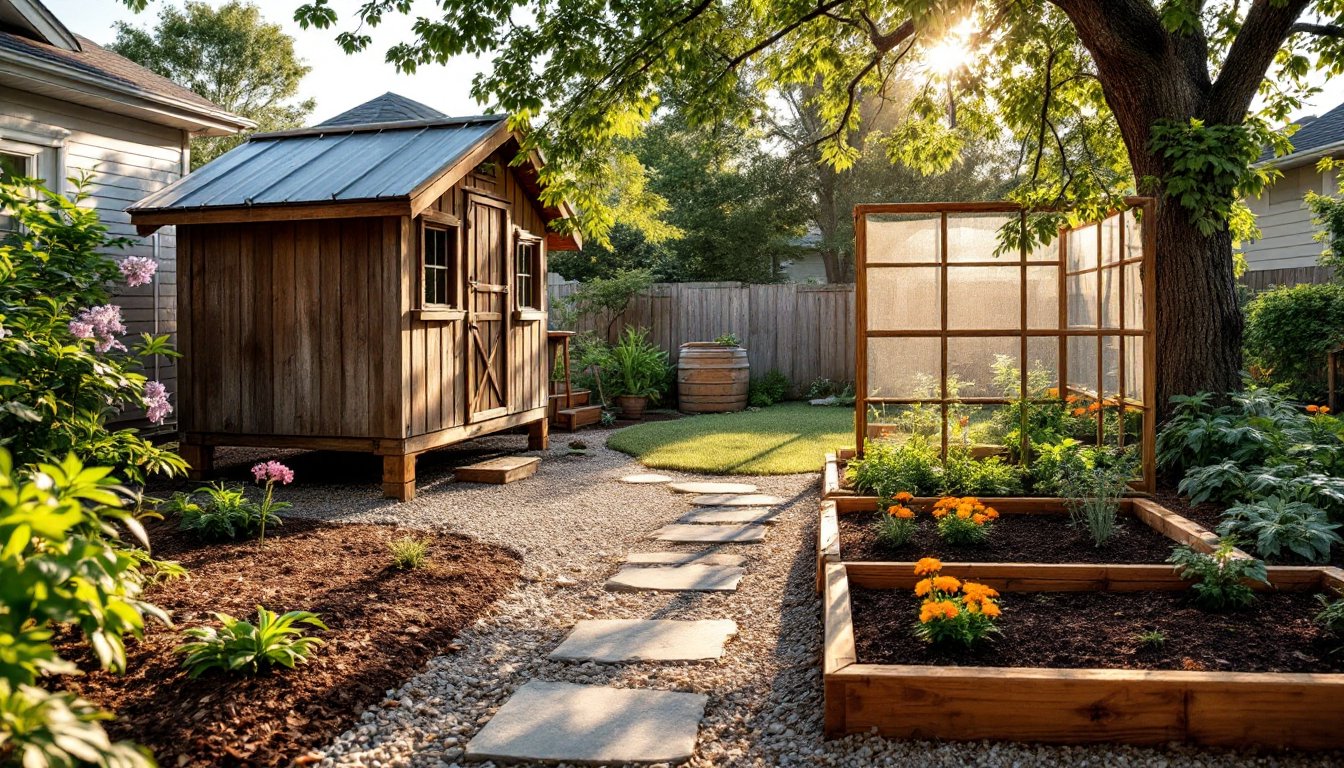
Hardscaping keeps your coop area functional and reduces mud season misery. A gravel or crushed rock pathway (2–3 inches deep) leading to the coop handles drainage better than bare earth and lasts longer than mulch. Use a landscape fabric underlayment to suppress weeds and prevent gravel from sinking into soft soil. For high-traffic areas, 3/4-inch crushed stone compacts nicely and drains fast: finer river rock looks better but slides under boot traffic.
Create a clean-out station or “dumping zone” near the coop where you can deposit old bedding, droppings, and compost. A small gravel pad (4×6 feet) with edging prevents this area from becoming a muddy mess. You can build a simple wooden bin frame using pressure-treated 2×6 lumber (nominal 2×6 lumber is actually 1.5×5.5 inches), securing it with galvanized corner brackets. This keeps your compost contained and ready for the garden.
Think about predator fencing as both function and landscape feature. A 1/2-inch hardware cloth barrier buried 12 inches deep around the run’s perimeter deters raccoons and weasels. This wire costs more than chicken wire but keeps threats out. If it’s visible, incorporate it into your hardscape plan, dark green hardware cloth blends better than shiny metal. Consider a raised coop foundation or hardware cloth apron extending 18 inches out from the coop’s base, buried under mulch or gravel. It’s unglamorous but prevents predators from tunneling underneath, and mulch hides it from view. Resources like Country Living and The Spruce offer detailed predator-proofing plans if you want to go deeper.
Budget-Friendly DIY Landscaping Tips
You don’t need a landscape architect budget to make your coop area functional and attractive. Source free or low-cost materials first: straw bales from local feed stores cost $4–8 per bale and work great for mulch around planting areas or as temporary shade blocks. Woodchips from tree-trimming services (often free if you haul them) make excellent coop-run underlayment. Let them age 6 months to a year before spreading: fresh chips can harbor mold.
DIY shade structures beat expensive pergolas. Two 4×4 posts (pressure-treated, buried 30 inches deep in concrete footings) can hold a simple shade cloth frame using 1×2 lumber and bolts. A 30–50% shade cloth ($20–40 for 20×20 feet) clipped to the frame keeps afternoon sun manageable without blocking cooling airflow. If you’re handy with a circular saw or miter saw, assembly takes a Saturday. Alternatively, plant a fast-growing deciduous tree, a mulberry or serviceberry provides shade within 2–3 years and produces edible berries chickens love.
Budget landscaping also means leveraging existing features. If you have a fence, use it as a windbreak or nighttime predator barrier. Cluster coop and run along it to reduce fencing needs. Use recycled bricks or pavers from demolition sites to edge beds or create step-stones in muddy spots. A free or low-cost design visit to Gardenista can spark ideas for repurposing materials you already own. Water management saves money long-term: route gutter downspouts into rain barrels (a 55-gallon food-grade drum costs $30–50) positioned near planting beds. Chickens appreciate cool water during heat spells, and you reduce hose watering during dry months.