Table of Contents
ToggleStone landscaping is one of the most practical and visually impactful upgrades a homeowner can make. Unlike plants that require ongoing maintenance and seasonal care, stone elements provide year-round visual interest, improve drainage, reduce weeds, and boost curb appeal without constant upkeep. Whether you’re working with a small urban lot or a sprawling suburban yard, front yard stone landscaping ideas can work with virtually any budget and skill level. The key is understanding what materials suit your climate, home style, and long-term maintenance preferences.
Key Takeaways
- Front yard stone landscaping ideas offer year-round visual appeal without the ongoing maintenance demands of plants, while improving drainage and reducing weeds naturally.
- Stone elements like gravel, boulders, and decorative rocks are durable, weather-resistant, and reduce pest habitats better than mulch or sod alternatives.
- Gravel costs $30–$60 per cubic yard for basic options, while decorative rocks range from $1.50–$8+ per pound, with 4–6 inches of depth recommended for most applications.
- Modern minimalist designs pair uniform stepping stones and angular boulders with gray pea gravel and minimal plantings, while cottage garden styles use irregular pathways and mixed stone sizes to create inviting, layered spaces.
- Grain size matters for gravel stability—smaller stones (⅜ inch) stay in place better, while larger stones (½–1 inch) offer bolder visuals but migrate more under foot traffic.
Why Stone Landscaping Transforms Your Front Yard
Stone does heavy lifting where other materials fall short. It’s durable, weather-resistant, and creates defined spaces without the fuss of mulch (which breaks down and requires annual replacement) or sod (which demands regular watering and mowing). Stone elements also improve water management by allowing rain to percolate around plant roots rather than pooling or running off, important for both plant health and preventing foundation issues.
From a curb appeal standpoint, stone projects a sense of permanence and craftsmanship. They signal that the property is well-maintained and thought-through. Stone pathways, borders, and accent rocks add visual hierarchy and draw the eye around your landscape in intentional ways. You can achieve sophisticated, contemporary looks or timeless cottage-garden charm depending on stone type, size, and placement.
Another practical benefit: stone landscaping reduces pest habitats. Thick mulch can attract termites and rodents, but exposed stone doesn’t provide that shelter. Combined with proper grading and drainage, stone elements help protect your home’s foundation while enhancing aesthetics.
Essential Stone Types for Outdoor Spaces
Choosing the right stone starts with understanding what’s available in your region and how each material performs. Stone selection affects both the look and the maintenance burden going forward.
Gravel and Crushed Stone Options
Gravel and crushed stone are the workhorses of landscape design. Pea gravel (smooth, rounded stones roughly the size of peas) is comfortable underfoot and ideal for pathways or play areas. Crushed granite and crushed limestone provide a more angular, decorative appearance and compact better, making them suitable for driveways or high-traffic zones. Marble chips deliver premium aesthetics but come at a higher cost and can be slippery when wet.
One key consideration: grain size matters. Smaller stones (around ⅜ inch) stay in place better and feel more polished, while larger stones (½ to 1 inch) look bolder but migrate more easily under foot traffic. Budget roughly $30 to $60 per cubic yard for basic pea gravel, scaling up significantly for premium options. A typical front-yard application uses 4 to 6 inches of depth, so measure your square footage and divide by 27 to determine cubic yardage.
Maintenance tip: Gravel and crushed stone require occasional raking to level and weed barrier fabric underneath to minimize mixing with soil and invading weeds.
Decorative Rocks and Boulders
Boulders and larger decorative rocks serve as focal points and add texture. Fieldstone (irregular, flat-surfaced rock) works beautifully in rustic schemes and stacked borders. River rocks (smooth, polished by water) create calm, modern aesthetics. Slate provides elegant, dark tones and can be stacked or laid flat. Granite boulders offer durability and timeless appeal.
When selecting boulders, consider scale. A single large boulder (200+ pounds) commands attention and requires placement before surrounding plants fill in. Clusters of three smaller rocks at varying heights feel more natural than rows of identical sizes. Landscape Design Ideas: Transform can help you visualize how to place focal stones effectively within your overall plan.
Budget for decorative rocks runs $1.50 to $8+ per pound depending on type and local availability. Hauling and placement labor often exceeds material cost, so factor in equipment rental or professional installation for pieces over 100 pounds.
Stone Landscaping Design Ideas for Every Style
Your stone layout should reflect your home’s architecture and your lifestyle. The best design balances visual appeal with practical maintenance expectations.
Modern Minimalist Layouts
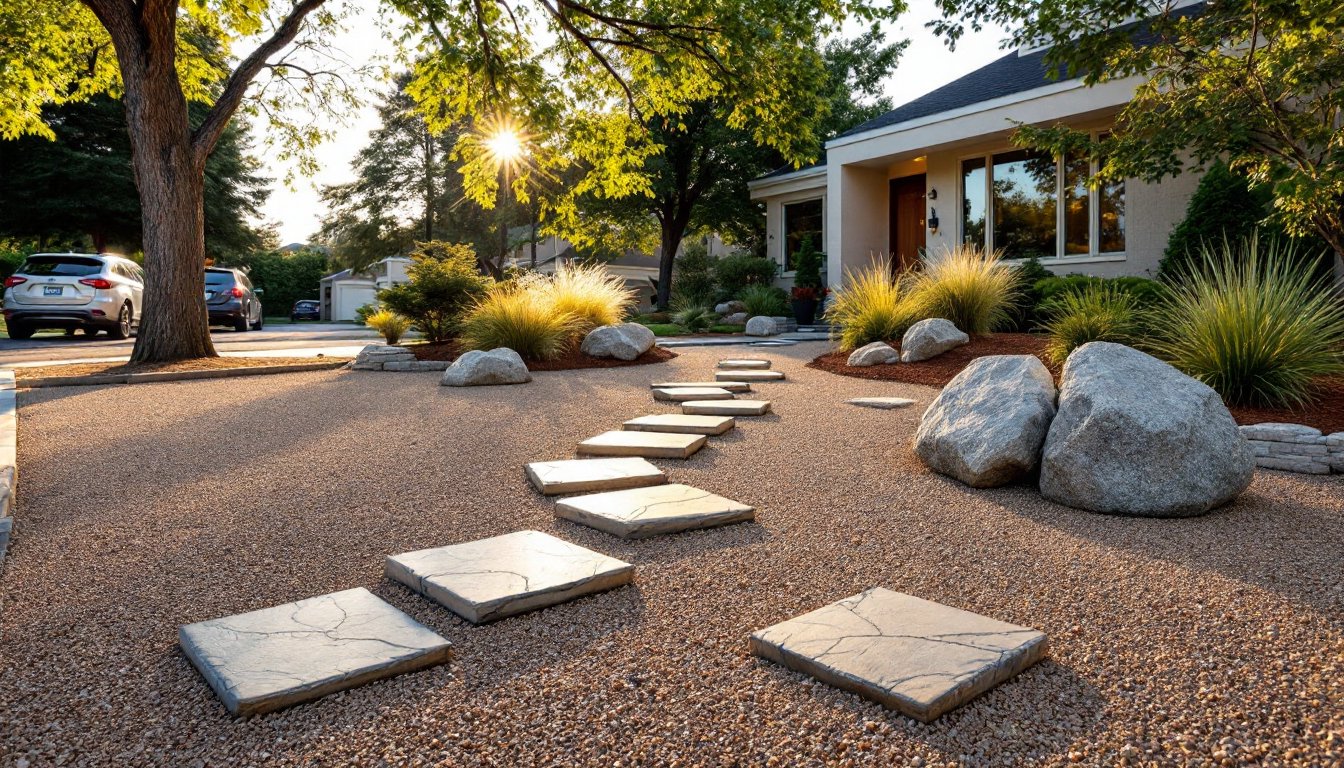
Contemporary homes pair well with clean lines, limited color palettes, and geometric stone placement. Think large, uniform stepping stones set into a bed of gray pea gravel with just a few accent plants. Chunky angular boulders (granite or basalt) in groups of two or three create visual interest without clutter. Decomposed granite (a brownish, compacted crushed stone) provides a refined foundation that suits modern aesthetics perfectly.
Minimalist schemes often use stone to define rather than fill. A stone border marks the property edge or frames a planting bed, but the interior remains open or sparsely planted. Hardscape steps or a simple stone pathway from the street to the entry provide function and style. These designs also reduce maintenance, fewer plants mean less watering, pruning, and seasonal cleanup. Resources like The Spruce offer dozens of contemporary landscaping examples that pair stone with architectural plants like ornamental grasses and architectural shrubs.
Natural and Cottage Garden Designs
If your home has traditional, rustic, or farmhouse character, stone should feel organic and abundant. Irregular fieldstone pathways meander through layered plantings. Pea gravel pathways feel inviting and personal. Mixed stone sizes and colors (honey-toned boulders paired with gray slate accents) create depth and warmth.
Cottage gardens thrive with abundant edging, raised stone borders define beds and add height to plantings. Stacked stone creates low walls or planters, and scattered rocks among groundcovers and perennials reinforce the naturalistic aesthetic. Garden Path Ideas: Transform walks through creating inviting walkways that encourage exploration, a hallmark of cottage design.
These schemes embrace color variation and weathered surfaces. A Garden Ideas: Transform approach layered with seasonal plantings, stone pathways, and focal boulders creates the lived-in charm that cottage gardens deliver. Planning guides from Sunset provide regional wisdom on which stone types weather beautifully in your climate and complement native plants.