Table of Contents
ToggleFlorida’s scorching heat, sandy soil, and humidity create unique landscaping challenges that many homeowners struggle to solve. Standard grass-and-shrub front yards often wilt, discolor, or demand constant upkeep in the Sunshine State. Yet curb appeal doesn’t have to mean fighting your climate, it means working with it. The right front yard landscaping approach combines heat-tolerant plants, smart hardscaping, and low-maintenance design to create a home exterior that looks sharp year-round while respecting Florida’s demanding weather. This guide covers 10 proven curb appeal ideas for Florida front yards, from native plant selections to drainage-smart hardscapes, that will transform how your home presents itself to the street, and potentially increase its resale value.
Key Takeaways
- Native Florida plants like coontie, ixora, and muhly grass are heat-tolerant alternatives that thrive in sandy soil and humidity without constant maintenance or irrigation.
- Smart hardscaping with permeable pavers, proper drainage, and metal edging protects your foundation from water damage while adding visual sophistication to curb appeal.
- Strategic lighting using stainless steel fixtures, LED bulbs, and pathway lights enhances nighttime curb appeal while improving security and visitor safety in Florida’s coastal environment.
- Replace water-hungry St. Augustine grass with drought-tolerant Zoysia or Bermuda grass, or eliminate lawn entirely with groundcovers and hardscaping for a low-maintenance front yard.
- Proper mulching (2–3 inches in plant beds) and quality edging create a polished, intentional appearance while reducing weeds and retaining soil moisture during Florida’s dry spells.
- Layered plantings with varied heights, specimen trees, and staggered bloom times keep your front yard landscaping visually fresh year-round while respecting Florida’s demanding climate.
Embrace Native Florida Plants and Heat-Tolerant Landscaping
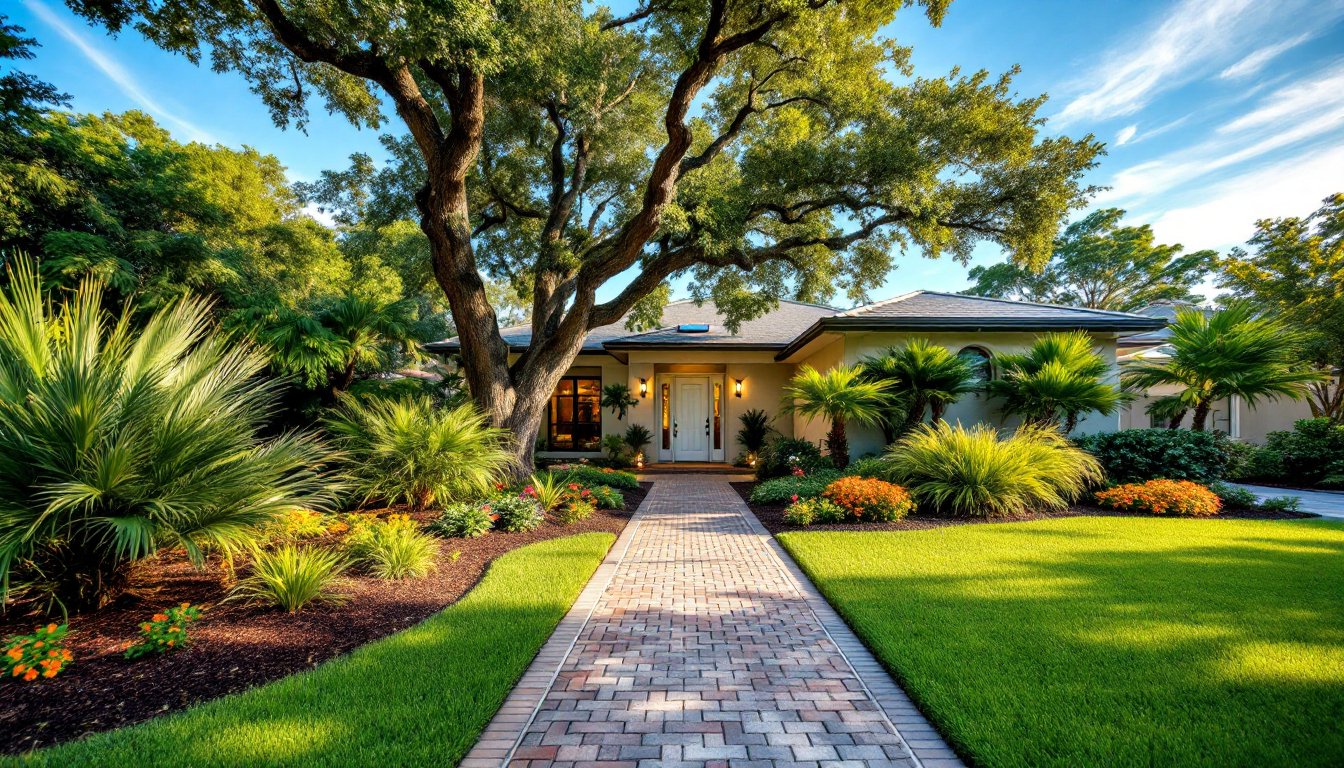
Native plants are the backbone of any successful Florida front yard. They’ve adapted to local heat, humidity, salt spray, and seasonal rains, which means they thrive without constant fussing. Coontie, ixora, muhly grass, and sabal minor are regional favorites that tolerate full sun and sandy soil far better than ornamentals bred for cooler climates.
Start by auditing your current plantings. If you have wilting azaleas or struggling hydrangeas, they’re telling you something, Florida’s too hot and dry for them most of the year. Replace them with native species that store water in their leaves or develop deep root systems. Warm-season ornamental grasses like muhly create movement and texture without irrigation demands. Coontie (Zamia pumila), a cycad native to South Florida, grows low and tropical-looking, perfect for front foundation plantings.
For vertical interest, live oak, crape myrtle, or smaller native trees like redbud work well. Aim for a mix of heights, tall shade trees, medium shrubs, and groundcovers, to create depth and visual continuity. Landscape Design Ideas: Transform your front yard by selecting species that flower at different times, keeping your curb appeal fresh through spring, summer, and fall. A professional arborist can recommend species suited to your specific microclimate, sandy ridge, coastal, or central Florida conditions differ significantly.
Hardscape Design That Works in Florida’s Climate
Hardscaping, the solid elements like walkways, edging, and patio areas, forms the visual framework of your front yard. In Florida, proper hardscape design also manages water. Heavy rains and poor drainage are constant headaches: a well-planned hardscape directs water away from the foundation while adding sophistication to your curb appeal.
Consider a front walkway that guides visitors from the driveway or street to your entry. Brick, concrete pavers, or natural stone all work, but they must sit on proper base layers. Compact 4 inches of crushed rock, then lay your pavers with minimal sand. This prevents shifting during Florida’s wet season. Avoid glossy finishes that become slippery when wet: textured pavers offer safer footing.
For edging, use steel, aluminum, or composite borders to separate plant beds from lawn. These materials resist rust and won’t rot in humid conditions. They also make maintenance cleaner, no more grass creeping into planting beds. A defined edge instantly sharpens your home’s appearance.
Permeable Pavers and Drainage Solutions
Permeable pavers are a game-changer for Florida. Unlike solid concrete, they allow water to drain through the surface rather than pooling or running off toward your foundation. They’re especially valuable in low-lying properties or areas prone to flooding. Install permeable pavers with a 2% slope away from the house, set on a sand base and base rock layer. This creates a functional drainage system that looks cleaner than French drains while handling heavy downpours.
Drip irrigation laid under mulch delivers water directly to plant roots without waste. Running lines on a timer ensures consistent moisture during dry spells without oversaturating during rainy seasons. Pair this with a rain sensor that cuts the system off during storms, and you’re maximizing efficiency. Southern Living frequently showcases drought-smart design for Southern properties, and permeable hardscaping is a core strategy.
Lighting and Pathway Features for Visual Impact
Front-yard lighting does triple duty: it enhances curb appeal at night, increases home security, and makes arrivals safer. But lighting in Florida needs careful planning, salt air corrodes standard fixtures, and humidity breeds mold on covers.
Use stainless steel or powder-coated aluminum fixtures rated for coastal environments. LED lights are essential: they run cool and last 25,000+ hours, crucial in Florida’s heat. Install solar pathway lights along walkways (no wiring needed, just ground stakes), uplights to highlight specimen trees, and accent lights framing your entry door. Space lights 3–4 feet apart along paths and aim for warm white (3000K) color temperature to avoid looking harsh.
A well-lit front entry is instantly inviting. Install a wall-mounted fixture flanking your door (one on each side if possible) and a recessed or pendant light above the entry if your porch allows it. Ensure fixtures are rated for wet locations (damp-rated minimum) given Florida’s humidity and occasional rain spray.
Pathway lights anchor your walkway to the home entrance and prevent visitors from tripping on uneven terrain. They also deter intruders by eliminating dark shadows. Step lighting on any stairs or level changes is both functional and adds dimension to your front facade.
Mulch, Edging, and Groundcover Strategies
Mulch is arguably the most underrated tool in Florida landscaping. It cools soil, retains moisture (critical during dry spells), suppresses weeds, and unifies the look of mixed plantings.
Use 2–3 inches of mulch in plant beds: don’t pile it against tree trunks or smother shrubs. Wood-fiber mulch breaks down faster in Florida’s heat than bark, but it’s budget-friendly. Cypress mulch resists decomposition longer and has a pleasant color, though it’s pricier. Avoid dyed mulches: Florida’s sun fades them quickly and they shed color onto pavers.
Groundcovers prevent bare soil from showing between shrubs and reduce weed pressure. Creeping fig, dwarf ophiopogon, or native sedges work beautifully under tall shrubs. They create a layered, intentional appearance that reads as “designed” rather than “neglected.”
Edging separates the intentional, planting beds, mulch, groundcover, from the casual (lawn). Install edging slightly recessed so mower wheels run on top, making lawn maintenance faster and preventing edges from being scalped. Metal or composite edging lasts longer than stone in wet climates. A clean edge makes even a simple planting scheme look sharp and professional.
Gardening in Paradise: 10 Ideas to Steal from Key West showcases how regional landscapes use layered plantings and strategic mulching to create tropical-looking front yards without constant maintenance.
Lawn Alternatives and Low-Maintenance Grass Options
Traditional St. Augustine grass looks great in a magazine spread but demands constant watering and mowing in Florida’s intense heat. If you’re rethinking lawn, you have real options.
Zoysia and Bermuda grasses are more drought-tolerant than St. Augustine and handle heat better. Zoysia establishes slower but needs less fertilizer and is denser (fewer weeds). Bermuda is faster-growing and handles traffic well but requires more frequent mowing during warm months. Both outperform St. Augustine in most of Florida, especially central and northern regions.
For small front yards, consider swapping lawn entirely for drought-tolerant groundcovers, ornamental grasses, or hardscaping. A paver or mulched front yard with layered plantings looks more intentional than a struggling lawn patch. Curbed regularly features modern home design trends that move away from traditional lawns toward sustainable hardscaping and native plantings.
If you keep grass, adjust watering schedules seasonally. Spring and fall need less water than summer: winter almost none. Use a rain sensor to avoid watering after storms. Raise mower height to 3–3.5 inches (taller grass shades soil, reducing water loss). These tweaks alone reduce lawn failure and water bills significantly. Small front yard landscaping ideas for Florida often center on minimizing lawn, not maximizing it.
Conclusion
Florida front yard landscaping succeeds when it respects the climate rather than fighting it. Native plants, smart hardscaping, thoughtful lighting, and strategic mulching transform curb appeal without demanding constant maintenance. Start with one or two improvements, swap a struggling shrub for coontie, add edging and fresh mulch, or install pathway lights, and build from there. Small changes compound over seasons, creating a front yard that looks intentional, inviting, and well-maintained. In Florida’s real estate market, polished curb appeal translates directly to perceived home value and faster sales. Your front yard is the first conversation your home has with the street.