Table of Contents
ToggleA pristine front yard doesn’t have to demand weekend after weekend of pruning, watering, and maintenance. Homeowners increasingly recognize that low-maintenance landscaping isn’t a compromise on curb appeal, it’s a smart investment in time and sanity. Whether you’re managing a busy schedule, living in a water-restricted region, or simply tired of fighting nature, thoughtful design choices can transform your front yard into an attractive, resilient space. The key lies in selecting the right plants, hardscaping materials, and irrigation strategies that work with your local climate rather than against it. This guide covers practical, proven ideas you can carry out yourself or adapt to your home’s specific needs and budget.
Key Takeaways
- Low-maintenance front yard landscaping saves significant time and water while boosting home value by using native plants and smart design rather than constant upkeep.
- Native plants and drought-tolerant groundcovers are the foundation of any low-maintenance yard—they thrive in your local climate without supplemental watering or pest management once established.
- Mulch and hardscaping elements like edging, pathways, and stone features reduce maintenance areas while creating visual structure and suppressing weeds with minimal replacement needs.
- Drip irrigation systems with timers cut water consumption by 30–50% compared to conventional sprinklers and can be installed affordably in an afternoon.
- Research your USDA hardiness zone and regional native plant societies to select species proven to perform in your specific climate—avoiding ornamental varieties that struggle in tougher site conditions.
- Start with one low-maintenance landscaping bed, observe plant performance through a full growing season, and refine your design based on what thrives in your yard.
Why Low-Maintenance Landscaping Matters for Modern Homeowners
Low-maintenance landscaping addresses a real problem: traditional yards require constant labor. Mowing, edging, fertilizing, and pest control add up to dozens of hours annually, time most homeowners simply don’t have. Beyond convenience, a thoughtfully designed low-maintenance yard reduces water consumption, which matters in drought-prone regions and saves money on utilities nationwide.
Structural landscaping choices also boost home value more reliably than temporary trendy plantings. When prospective buyers see established groundcovers, mature native plants, and clean hardscaping, they recognize stability and forward-thinking design. A well-designed low-maintenance front yard signals that a home is well-cared-for without requiring a full-time groundskeeper.
The environmental angle matters too. Native plants support local pollinators, reduce chemical runoff, and typically thrive with less supplemental water and fertilizer. You’re not just making life easier for yourself, you’re creating habitat and reducing your ecological footprint. Modern landscaping should align with your lifestyle and climate, not force you into a battle with Mother Nature each season.
Native Plants and Drought-Tolerant Groundcovers
Native plants are the foundation of any low-maintenance yard. They’ve evolved to thrive in your specific climate and soil without supplemental watering, fertilizer, or pest management once established. The trick is choosing species that actually work in a front-yard setting, meaning they tolerate the sunlight exposure and root competition from existing trees or structures in your space.
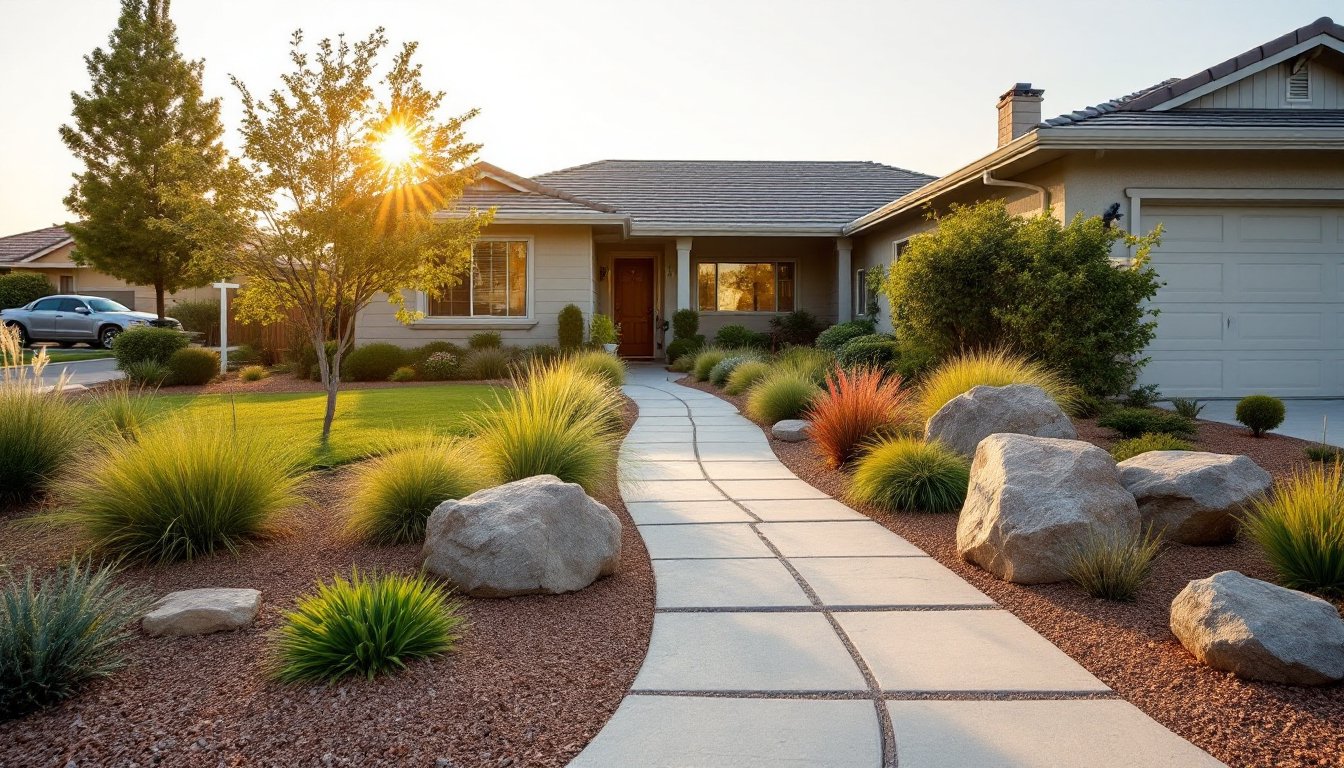
Drought-tolerant groundcovers replace thirsty lawn grass in many climates. Sedums, creeping phlox, and ornamental grasses spread across beds, suppress weeds, and need infrequent watering after their first growing season. In arid climates, decomposed granite or rock mulch paired with desert-adapted shrubs (like coyote brush or germander) creates attractive, virtually maintenance-free beds.
When selecting plants, research your USDA hardiness zone and local native plant societies. A regional native plant propagator or cooperative extension office can point you toward species perfectly suited to your area. One common mistake: buying “pretty” plants bred for ornamental nurseries that struggle once transplanted into tougher site conditions. Stick with proven regional performers.
Best Plants for Different Climates
In cool, moist climates (Northeast, Pacific Northwest), consider native sedges, serviceberry, and shade-tolerant groundcovers like sweet woodruff. These thrive in moderate rainfall and partial shade without fussing.
Hot, dry regions benefit from salvias, desert roses, and gravel mulch systems. Perennials like blanket flower and black-eyed Susan handle intense sun and infrequent water. Research shows that lawn-free, low-impact front yards increasingly feature such regionally adapted plantings.
Transitional zones (Mid-Atlantic, Midwest) can combine both approaches: native shade plants under existing trees, and sun-tolerant coneflowers, joe-pye weed, or native ornamental grasses in open areas. The payoff is a landscape that looks intentional and requires minimal intervention.
Mulch and Hardscaping Solutions
Mulch isn’t just filler, it’s a hardworking component that suppresses weeds, moderates soil temperature, and reduces water loss through evaporation. For low-maintenance beds, apply 3 to 4 inches of shredded bark or wood chips to areas around plantings. Replace it every 2–3 years as it breaks down. Avoid thick mulch against plant stems or tree trunks, which can encourage rot and pest issues: maintain a 2-inch clearance.
Inorganic mulches like pea gravel, river rock, or decomposed granite work well in arid and semi-arid climates and last much longer than wood. They don’t retain moisture as effectively in wet climates, but they create clean, modern aesthetics and require no replacement.
Hardscaping, pathways, patios, edging, defines spaces and reduces the area you need to maintain as plantings. Even a simple gravel or mulch border between your planted beds and lawn creates visual separation and makes edging easier. Landscape fabric under mulch or gravel further suppresses weeds: use heavyweight fabric and overlap seams by at least 6 inches to prevent edges from lifting.
Creating Structure With Stone and Pavers
Walking paths and entry focal points don’t require professional installation. Permeable pavers, flagstone, or steppers laid in sand allow water drainage and can be reset if frost heave lifts them. For a front walk, a simple 2- to 3-foot-wide path using large steppers or pavers set in sand creates visual order and guides visitors.
Edging between lawn and beds keeps mower lines clean and prevents grass from creeping into plantings. Aluminum or steel edging buried 3 inches deep lasts decades and requires no maintenance. Stone or log edging adds rustic character but needs periodic repositioning as soil shifts.
A front focal point, a small patio, grouping of large boulders, or hardscape feature, anchors the design and reduces the impression of blank space. This doesn’t demand enormous investment: even a garden path using locally sourced stone or recycled pavers creates intention and reduces lawn area.
Smart Irrigation and Water-Saving Techniques
Hand-watering or oscillating sprinklers waste water and time. Drip irrigation delivers water directly to plant roots, reducing waste and promoting healthy growth. A simple drip line system costs $30–$100 for a modest front bed and can be installed in an afternoon. Lay tubing along plant rows, puncture holes near plant stems, and connect to a timer. This approach cuts water consumption by 30–50% compared to conventional sprinklers.
Timers are essential: set them to water early morning or dusk to minimize evaporation. Most climates need deep watering once or twice weekly during the growing season, tapering off as plants mature. Established native plants and groundcovers typically need water only during drought periods, a major advantage over traditional ornamentals.
Amendments also support water retention. Working compost or aged bark into planting beds improves soil structure, increasing the soil’s ability to hold moisture and nutrients. Sandy soils benefit from organic matter: clay soils improve with both organic matter and mulch, which reduces compaction and standing water issues.
Consider using home improvement resources and gardening guides to understand your local watering requirements. During droughts, switch to hand-watering established plants or mulch deeper to conserve moisture. Rainfall sensors on irrigation systems automatically skip watering after rain, further reducing waste and your water bill.
Conclusion
Building a low-maintenance front yard means working with your climate and site conditions rather than fighting them. By choosing native plants, installing smart hardscaping, and automating irrigation, you create a landscape that looks polished with minimal upkeep. Start with one bed, observe how plants perform through a full growing season, and refine your design based on what thrives. Your future self, and your property value, will thank you.