Table of Contents
ToggleYour front yard is the first thing neighbors and visitors see, and it’s your chance to make a real statement. Whether you’re staring at a sea of green or tired of your current landscape, adding vibrant color transforms curb appeal in ways that aren’t as daunting as you might think. You don’t need a team of professionals or a bottomless budget: strategic plant selection, thoughtful hardscape accents, and seasonal planning can turn your front yard into a living showcase. This guide walks you through selecting colors that complement your home, choosing plants that thrive in your climate, and maintaining that pop of color year-round.
Key Takeaways
- Front yard landscaping with color boosts perceived home value by 5-10% and signals pride of ownership to neighbors and potential buyers.
- Identify your home’s undertones (warm or cool) and choose a two-color scheme with one dominant color (70%) and one accent (30%) to create a cohesive, professional-looking landscape.
- Layer seasonal plantings strategically: spring bulbs, summer annuals, fall asters and ornamental grasses, and winter evergreens with colored foliage to maintain vibrant color year-round.
- Hardscape elements like mulch color, painted doors, and pavers are underrated color tools that enhance curb appeal without relying solely on plants.
- Commit to 15 minutes of weekly deadheading during bloom season and consistent watering (1-2 inches per week) to keep your front yard looking intentional and colorful.
Why Color Matters in Front Yard Design
Color isn’t decoration, it’s psychology on a budget. A thoughtfully colored front yard boosts curb appeal by an estimated 5-10% in perceived home value, and it signals pride of ownership to neighbors and potential buyers alike. Your landscape tells a story before anyone steps inside.
When color is missing, even a clean lawn and trimmed shrubs feel bland. Conversely, chaotic color choices overwhelm the eye. The sweet spot is strategic: a cohesive palette that plays with your home’s existing tones (siding, roof, trim) rather than fighting against them. Color draws the eye, creates focal points, and guides visitors toward your front door, all things that matter whether you’re staying put or selling down the road.
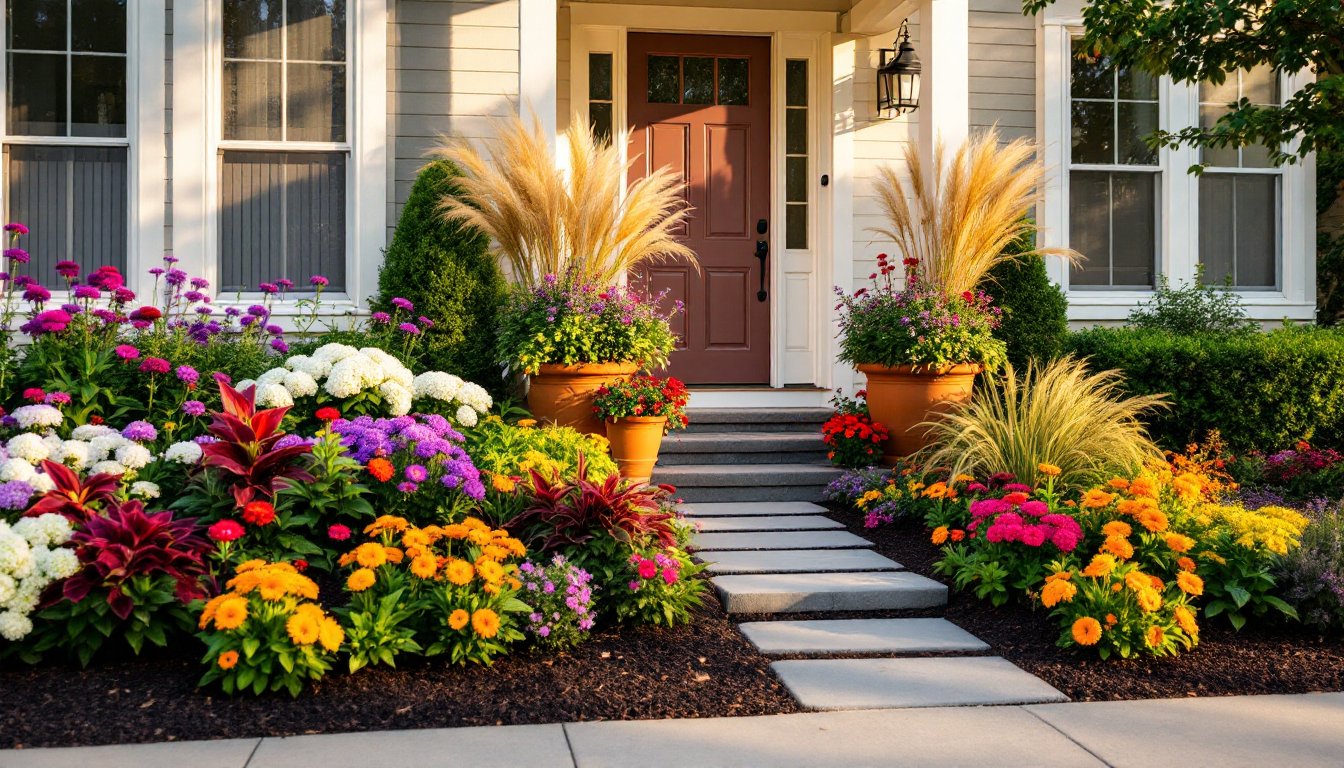
Red flowers against dark green foliage? Pop. Purple blooms near a gray stone entry? Drama. White hydrangeas framing a brick home? Elegance. The key is intention, not volume. A few plants in a strong color strategy work harder than a rainbow hodgepodge.
Choosing the Right Color Palette for Your Home
Start by identifying your home’s undertones. Is your siding warm (cream, tan, warm gray) or cool (white, blue-gray, charcoal)? Does your roof lean red, brown, or gray? These anchors determine which colors harmonize versus clash.
Warm homes (think ranch-style with terracotta trim or honey-toned brick) pair beautifully with warm flower hues: golden yellows, deep oranges, warm reds, and peach tones. A hot-pink celosia or coral-colored zinnias will feel intentional, not accidental.
Cool homes (modern with cool gray siding or a dark charcoal roof) sing with cool-toned flowers: deep purples, soft blues, silvery-pink petunias, and white. Pairing a cool home with warm flowers often feels jarring, though a pop of unexpected color can work if it’s deliberate and confined.
The classic safe bet? Start with a two-color scheme. Pick one dominant color (70% of your plantings) and one accent (30%). For example, white with purple accents, or yellow with burgundy. This prevents decision paralysis and looks professionally cohesive. Add texture and foliage variation to prevent monotony, pair flowering plants with fine-textured ornamental grasses or bold hostas. Research shows homeowners who follow Landscape Design Ideas that align with their home’s architecture see better outcomes than those who treat landscaping separately from their home’s existing style.
Best Plants and Flowers for Year-Round Color
Seasonal color is non-negotiable if you want a vibrant yard that works all 12 months. The mistake most DIYers make? Planting annuals (which die in frost) without a backbone of perennials and shrubs.
Spring bloomers (April–May) include tulips, daffodils, primrose, and hellebores. Plant bulbs in fall for reliable spring color: they’re cheap insurance. Prune back faded winter interest plants as new growth emerges.
Summer mainstays (June–August) are where annuals shine. Zinnias, cosmos, marigolds, and dahlias deliver bold, sustained color. Deadhead spent blooms weekly, remove the faded flower just below the bloom to trigger more flowering. This 2-minute weekly task multiplies your color payoff. Heat-loving salvia, lantana, and verbena handle hot, dry spots that other plants sulk in.
Fall transitions (September–November) belong to asters, chrysanthemums, ornamental grasses, and coleus (technically a perennial foliage plant with burgundy, orange, and chartreuse varieties). These bridge the summer-to-winter gap when many annuals peter out. Don’t yank them immediately after first frost: the structural interest holds color narratives together.
Winter bones (December–March) rely on evergreen shrubs with colored foliage (red-twig dogwood, golden Hinoki cypress, burgundy Japanese maples), winter-blooming hellebores, and ornamental grasses that tan rather than disappear. Evergreens prevent your yard from looking dead: colored foliage adds dimension. Resources like The Spruce offer comprehensive seasonal planting charts for your region.
Hardscape and Accent Colors to Enhance Curb Appeal
Plants aren’t your only color tool. Hardscape, pavers, mulch, stones, and painted elements, adds permanent color infrastructure.
Mulch color is underrated. Black or dark brown mulch intensifies adjacent plant colors and reads more polished than tan or red dyed mulch (which fades). Plan on reapplying 2-3 inches annually: it breaks down over time. Fresh mulch alone refreshes a tired yard for under $300 in most cases.
Painted elements (doors, shutters, arbors, garden gates) deserve intention too. A deep teal front door against a warm-toned home pops without clashing. A painted arbor in a color that echoes an interior accent wall ties indoors to outdoors. Paint with exterior-grade primer and two coats of exterior paint: cheap paint peels within a season.
Stone and pavers carry weight. Gray pavers feel cool and contemporary: warm-toned brick feels traditional. Mixing materials (gray pavers with a limestone border) adds sophistication. If you’re installing new paths or patios, factor color into the spec before digging.
Decorative elements, planters, statuary, water features, contribute color too. A few large pots (18+ inches) in a bold complementary color strategically positioned near your entry anchor the design. Terracotta works for warm palettes: glazed ceramic in jewel tones suits cool homes. Examples of vibrant color schemes that succeed are detailed in case studies like this Mediterranean front yard design, which shows how hardscape, plantings, and accents work in concert.
Maintaining Colorful Landscaping Throughout the Seasons
Color fades without maintenance. Here’s what keeps a vibrant front yard looking intentional year-round.
Deadheading (removing spent flowers) is the single biggest multiplier. Set a weekly alarm during bloom season, 15 minutes yields dramatic results. Use clean hand pruners to cut stems just below the faded flower.
Watering discipline matters. Underwatered flowers dull: overwatered ones rot or invite mildew. Most flowering plants prefer 1-2 inches per week (including rainfall). Water early morning to minimize disease. New plants and annuals need more frequent water their first season as roots establish.
Fertilizing sustains color intensity. Perennials and shrubs benefit from a balanced fertilizer (10-10-10 NPK ratio) in spring. Annuals and heavy bloomers are heavy feeders, side-dress with compost in mid-summer or use a slow-release fertilizer at planting. Bag the spent blooms and plant matter to prevent pest harboring.
Seasonal cutbacks shape the narrative. In late fall, cut back ornamental grasses to 4-6 inches to make room for spring growth. Prune spring-blooming shrubs right after flowering (not in fall, which removes next year’s buds). Summer bloomers get cut back in early spring before new growth. Timing matters, wrong timing means no flowers next year.
Seasonal transitions require intention. Don’t let spring bulb foliage go brown before removing it: plan shade and structure to hide it (underplant with hostas or ferns). This is why mixed plantings work: perennials mask the decline of earlier bloomers. Research local care calendars from Country Living or university extension services to dial in your region’s timing.
Conclusion
A colorful front yard doesn’t happen by accident, it’s built on intentional choices about palette, plant selection, and consistent maintenance. Start with your home’s undertones, pick a two-color scheme, layer in seasonal bloomers and year-round structure, then commit to 15 minutes weekly of deadheading and seasonal care. The payoff? A front yard that tells your story, boosts curb appeal, and makes every arrival home feel a little brighter. Begin with one season and expand from there: you’ll quickly build the rhythm that keeps color flowing all year.