Table of Contents
ToggleSouthern California backyards demand a different approach than the rest of the country. Intense sun, sporadic rainfall, and rocky soil mean that cookie-cutter landscaping ideas won’t cut it, you need a plan tailored to your climate. Whether you’re dealing with a quarter-acre lot or a compact urban yard, there are practical ways to create an outdoor space that’s both beautiful and sustainable. From drought-tolerant plants to hardscaping that handles the heat, these seven landscaping ideas will help you build a backyard that thrives in the SoCal environment while giving you a functional space you’ll actually use.
Key Takeaways
- Southern California backyard landscaping ideas work best when tailored to the region’s intense sun, sporadic rainfall, and rocky soil—cookie-cutter designs won’t thrive.
- Xeriscaping and native plant gardens can reduce water usage by up to 50% while creating beautiful, low-maintenance outdoor spaces that support local pollinators.
- Hardscape elements like patios, pathways, and retaining walls make up 50% of a successful SoCal yard and require proper base preparation, drainage, and material selection to withstand intense heat.
- Shade structures such as pergolas, shade cloth, and shade sails are essential for creating usable outdoor entertainment spaces that protect against brutal afternoon western sun.
- Water features, pools, and soaking tubs add both aesthetic and functional value by cooling the microclimate, though they require permits and proper maintenance in Southern California.
- Low-voltage LED lighting and finishing touches like outdoor rugs, container plantings, and seating areas transform a yard into an inviting living space that’s enjoyable year-round.
Desert-Inspired Xeriscaping for Low-Maintenance Beauty
Xeriscaping isn’t just about brown rocks and cacti, it’s a smart design strategy that cuts water use by up to 50% without sacrificing visual interest. The core principle is simple: choose plants adapted to dry conditions and group them by water needs.
Start by replacing thirsty turf grass with drought-tolerant alternatives like blue fescue, California native sedges, or decomposed granite paths. If you want to keep a small lawn area, consider a postage-stamp-sized section closer to the house where you’ll actually use it. Build raised beds or mounds to improve drainage: Southern California’s clay-heavy soil holds water, which kills succulents and Mediterranean plants.
Layer your design with a variety of textures: ornamental grasses like black mondo grass and purple fountain grass, broad-leaved succulents such as agave and echeveria, and spiky accent plants like yucca or rosemary. These plants aren’t boring, they move in wind, cast interesting shadows, and look stunning year-round. Space plants farther apart than you instinctively would: they’ll grow and fill in. Underplanting with sedums and creeping thyme softens hardscape edges and suppresses weeds without fuss.
Water deeply but infrequently during establishment (first year), then back off. A soaker hose or drip irrigation system on a timer beats hand watering, especially during summer. Skip the bark mulch and use pumice, decomposed granite, or lava rock instead, they don’t retain moisture like wood does, which is exactly what you want in a xeriscape.
Native Plant Gardens That Thrive in Southern California Heat
Going native is the easiest way to succeed in SoCal’s climate. Native plants are evolved for local rainfall patterns, pests, and soil. They need less water, fertilizer, and fussing once established, and they support local pollinators and wildlife.
Staple natives for Southern California include California poppy (the state flower, and it reseeds freely), toyon, ceanothus (California lilac), manzanita, sage species, and buckwheat. For groundcovers, silver carpet and California fuchsia add color without height. If you want shade structure, native coast live oaks and California sycamores create canopy while appreciating low water once established.
Arrange natives in drifts rather than single plants scattered throughout. Three or five of the same plant grouped together has more visual impact than dotting one everywhere. This approach also makes irrigation easier, you water the thirsty plants together, separate from the drought-tolerant ones. Many California natives flower in spring or early summer, so layer in evergreens and silvery foliage plants to keep interest during the quiet months.
The real payoff comes in year two and beyond. Once established (typically after one growing season of regular watering), natives laugh at summer. No supplemental water. No pest sprays. Just resilience. Local nurseries now stock native plants year-round: search for California native plant nurseries in your region for the best selection and advice.
Hardscaping Solutions: Patios, Pathways, and Retaining Walls
Hardscape, the non-plant infrastructure, makes up about 50% of a successful SoCal yard. Sun exposure is brutal, so material choice matters.
Patios and seating areas should maximize shade or be positioned where morning sun hits but afternoon heat is blocked by a structure or canopy. Decomposed granite is affordable and drains instantly, but it shifts underfoot. Porcelain pavers mimic natural stone, stay cool underfoot, and don’t require sealing like travertine does. Concrete is economical but gets scorching in direct summer sun (touch-test before installing seating). For a premium finish, porcelain or large-format pavers set in dry mortar with proper base preparation will outlast cheaper options.
Pathways guide movement and break up large planting areas. Use the same material family as your patio for cohesion. Width matters: 3 feet minimum for two people walking side-by-side, 2 feet for narrow passages. Slope pathways slightly (1/8 inch per foot) for drainage. Edging with steel or landscape aluminum keeps decomposed granite and mulch from spilling into planting beds.
Retaining walls aren’t optional if your yard slopes. Walls over 3 feet tall or holding back significant earth require engineering and permits in most jurisdictions. For shorter terracing, concrete retaining wall blocks are easy to install and affordable. Stacked stone looks premium but requires solid base preparation. All retaining walls need drainage rock or a perforated drain line behind them: trapped water will topple even well-built walls. Local codes often specify setbacks from property lines and height limits, so check before digging.
Hardscape prep is non-negotiable. Compact the base with a plate compactor, lay compacted rock base (4-6 inches), then set pavers. Shortcuts here mean sunken, cracked surfaces within two seasons.
Water Features and Pools for Modern Outdoor Living
Water features cool the microclimate and add sound, making even a small backyard feel like a retreat. You don’t need an Olympic pool, small fountains, basins, or ponds work just as well.
Fountains and water features can be installed without permits if they’re non-structural and under a certain volume (check local codes). A simple fountain sits on a patio, recirculates through a pump, and costs $200–$2,000 depending on material and finish. Partner with native plantings to create that garden oasis feeling. A spill basin with stacked stone looks organic and doesn’t require digging. Key: ensure the basin holds water properly and the pump outlet doesn’t dry out the surrounding soil.
Pools and spa features are a different beast. They require building permits, electrical work (NEC compliance), proper grading, and ongoing maintenance. A fiberglass or vinyl small pool (15×25 feet) runs $15,000–$50,000 installed. Budget for equipment pads (concrete foundation for pump and filter), bonding (electrical safety), and adequate drainage. In SoCal’s heat, water evaporates quickly: a pool cover or shade structure cuts loss and keeps the water cooler. Even a modest salt-chlorine system beats manual chlorine dosing.
Smaller soaking tubs or plunge pools (4×8 feet, 2–3 feet deep) offer a spa feel without the full investment or maintenance load. These still need permits and proper electrical work, but cost less and use less water. Position any water feature for shade relief during the hottest hours (afternoon), and incorporate it into your pool landscaping plan early so hardscape, plants, and utilities work together.
Creating Outdoor Entertainment Spaces With Style
A well-designed outdoor space becomes an extension of your home. In SoCal, backyards are lived in nearly year-round, so making it functional and comfortable is essential.
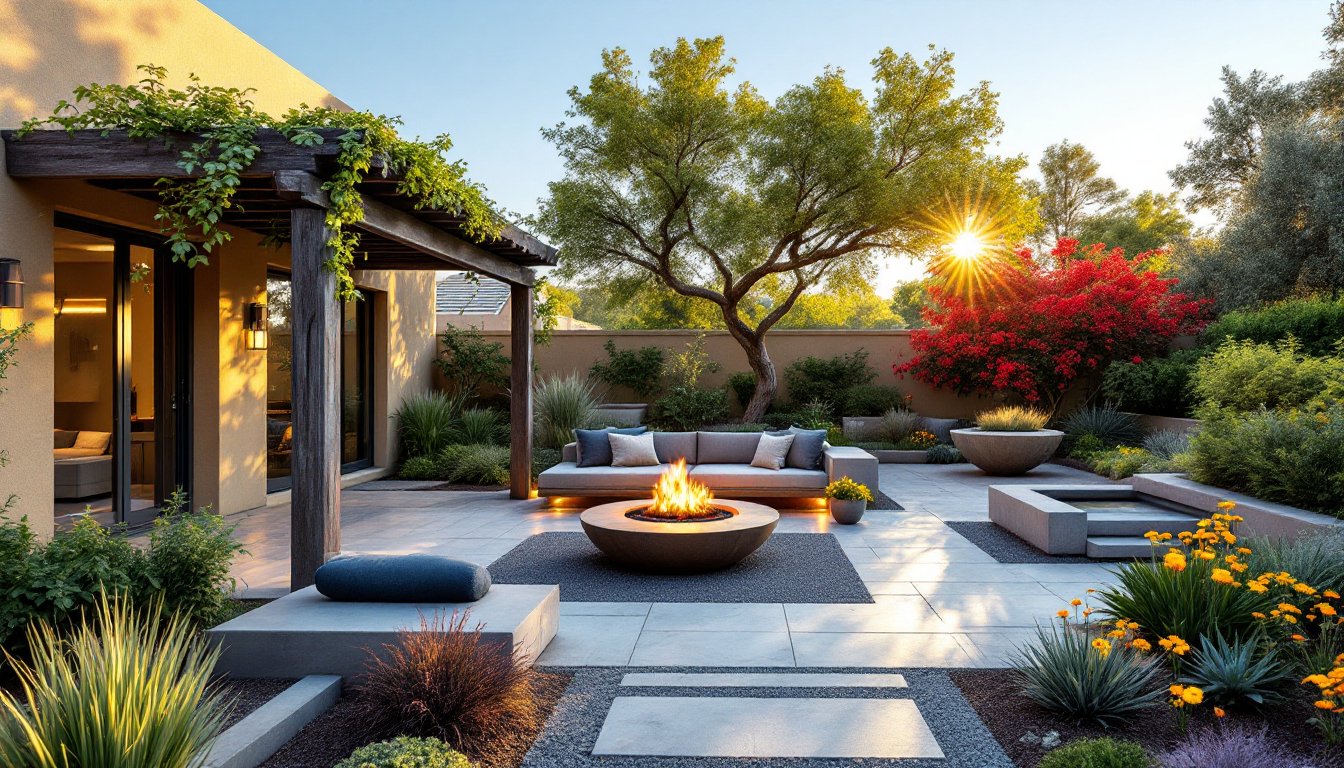
Shade structures are the backbone of usable space. A pergola (open-roof framework) costs $1,500–$5,000 installed and looks polished: pair it with climbing vines (jasmine, clematis, or grapes) for filtered shade. Shade cloth on aluminum frames is cheaper ($500–$2,000) and adjustable if you want more sun in winter. Shade sails (tensioned fabric triangles) are trendy, sleek, and run $800–$3,000 depending on span. All should be oriented to block afternoon western sun (the hottest exposure).
Seating and gathering areas benefit from built-in benches around a fire table or outdoor fireplace. A basic fire table runs $300–$1,500: built-in concrete or stone seating surrounding it adds another $2,000–$5,000. Ensure seating backs are positioned to catch views or create privacy from neighbors. Raised planter boxes double as informal seating edges while adding greenery, fill them with herbs or seasonal flowers.
Kitchen and dining zones don’t need to be fancy. A simple outdoor sink (with drainage and a shutoff valve) makes food prep and cleanup realistic. Permanent gas grills need a dedicated pad and gas line (hire a licensed tech for this). Built-in countertop space around the grill, even just cut from exterior-grade concrete or porcelain pavers, dramatically improves functionality. Add a low-voltage LED string light overhead and suddenly it’s an actual kitchen, not just a grill on pavers. Reference landscape design ideas to see how outdoor entertaining zones integrate with overall yard flow.
Lighting and Finishing Touches That Elevate Your Landscape
Lighting transforms a yard from “nice during the day” to “we’re living out here at night.” It’s also critical for safety on pathways and stairs.
Path lighting uses low-voltage LED fixtures (12V or 24V, powered by a transformer) spaced 8–10 feet apart along walkways. These are affordable ($20–$50 per fixture), easy to install (no digging trenches, just stake and run wire), and use minimal electricity. Avoid blinding bright lights: warm-colored LEDs (2700K) feel inviting rather than like a parking lot.
Uplighting on trees or architectural features creates drama at night. Spotlights at the base of a tree silhouette it against a fence or wall. Wash lighting across a planting bed brings color and texture to life after dark. Keep fixtures subtle, aim for mood, not visibility.
Overhead lighting over seating or dining areas can be pendant fixtures hung from a pergola, flush-mount ceiling lights if you have a solid overhang, or the aforementioned string lights for a casual vibe. Ensure switches are conveniently located: a smart home system lets you dim or control lights from your phone.
Finishing details are the layer that makes a yard feel complete. Outdoor rugs anchor seating zones and add color. Cushions and throw pillows signal “this is a real living space, not just infrastructure.” Container plantings at entry points and pathways add instant polish, use tall planters (24+ inches) for impact and group odd numbers (three or five) for visual balance. Water them more frequently since containers dry fast in SoCal heat. Seasonal plantings (ornamental kale in winter, salvia and verbena in summer) keep things fresh without replanting the entire yard.
Conclusion
Your Southern California backyard doesn’t have to be a high-maintenance money pit. Smart plant choices, durable hardscape, and thoughtful design mean you’re building a space that sustains itself while actually improving as it matures. Start with the elements that matter most, shade and seating, and layer in plantings and finishing touches over time. Many of the best outdoor spaces take a season or two to really settle in. The payoff is a yard that’s genuinely useful, beautiful, and suited to where you actually live, not some aspirational magazine spread. Your future self will thank you when you’re sitting under a pergola, shade sail, or mature tree canopy in July, surrounded by thriving drought-tolerant plants that ask almost nothing of you.