Table of Contents
ToggleTired of mowing, watering, and fighting with lawn maintenance? Rock landscaping offers a practical, low-maintenance alternative that transforms your front yard into a polished, modern space. Whether you’re battling shade, poor drainage, or simply want to cut back on yard work, a grassless rock garden delivers visual impact while reducing upkeep to nearly zero. This approach works in any climate and requires far less water than traditional landscaping, making it an eco-conscious choice for homeowners ready to ditch the grass.
Key Takeaways
- Front yard landscaping ideas with rocks and no grass eliminate mowing, watering, and fertilizing while reducing yard maintenance to nearly zero.
- Rock landscaping requires minimal upkeep with only occasional raking every few weeks, and properly installed rock beds last 5–10 years with minimal weed growth when paired with landscape fabric.
- River rocks and smooth pebbles offer a polished, high-end appearance at $40–80 per ton, while decorative gravel alternatives and wood chips provide budget-friendly grassless options that suppress weeds effectively.
- Modern minimalist rock gardens use clean lines, 1–2 complementary rock colors, and strategic boulders as focal points to create calm, intentional designs without clutter.
- Xeriscape and desert-inspired rock landscapes combine drought-tolerant plants like sedums and ornamental grasses with warm-toned decomposed granite to maximize sustainability and curb appeal.
- Initial rock landscaping costs are recouped within years through eliminated water bills and equipment maintenance, while also increasing property value and signaling a well-maintained home to buyers.
Why Rock Landscaping Is a Smart Choice for Your Front Yard
Rock landscaping isn’t just a trend, it’s a practical solution rooted in real benefits. Unlike grass, rocks don’t need mowing, fertilizing, or weekly watering. They don’t develop bare patches or require aeration. Once installed properly, rock beds suppress weeds more effectively than almost any other ground cover when paired with landscape fabric underneath.
Maintenance is genuinely minimal. A quick rake every few weeks keeps rocks looking sharp and removes debris. Most rock beds last 5-10 years before needing top-up material, compared to the constant maintenance demands of turf. For homes in hot, dry climates, or areas with heavy clay soil that resists grass growth, rock landscaping becomes the obvious choice.
Cost-wise, initial installation runs higher than seeding a lawn, but you’ll recoup that investment within a few years by eliminating water bills, equipment purchases, and labor. Rock gardens also increase curb appeal and property value because they signal a well-maintained, thoughtfully designed home. Potential buyers see a rock yard as low-drama landscaping, which appeals to busy homeowners.
Popular Rock Types and Materials for Grassless Landscaping
Choosing the right rock type shapes both the look and longevity of your yard. Different materials serve different purposes, some work as visual anchors, others as functional ground cover. Understanding your options prevents costly mistakes and ensures your landscape holds up through seasons of weather.
Decorative River Rocks and Smooth Pebbles
River rocks and smooth pebbles are the go-to choice for attractive, finished-looking rock beds. These rounded stones come in sizes from 1 to 3 inches and appear in warm earth tones, tan, rust, gray, and cream. They’re comfortable underfoot if you need to walk through beds, and they photograph beautifully, which matters if curb appeal is your goal.
River rocks cost more per ton than crushed stone (typically $40-80 per ton depending on region and size), but a little goes a long way visually. A 2-3 inch depth in a standard 4×8 bed requires only 1-2 tons. The smooth finish also means rocks stay put better on slopes, they don’t tumble as easily as angular gravel. The trade-off: smaller pebbles can work into shoes and track into the house more readily than larger, heavier stone. For a polished, high-end look that resists settling, river rocks are worth the premium.
Mulch and Wood Chips as Rock Alternatives
Wood chips and mulch aren’t technically rock, but they belong in any grassless landscaping discussion because they cover ground beautifully and suppress weeds. Hardwood mulch ($20-40 per ton) lasts 2-3 years before breaking down and needing replacement, while river rocks persist for years. Shredded bark chips work well around plants and soften the landscape with warm, natural tones.
The catch: wood products retain moisture, which can encourage fungal growth in humid climates and create conditions for wood-destroying insects if piled against house framing. Never let mulch touch the siding or foundation. For a practical hybrid approach, use mulch in planting beds and surround them with river rock or gravel for visual definition and better drainage. This combination looks intentional and maintains the low-maintenance advantage while protecting your home’s structure.
Design Styles and Layout Ideas for Rock Front Yards
A rock yard without intentional design just looks like gravel. The layout, plant choices, and material grades transform raw materials into a cohesive landscape. Whether you’re aiming for serene or striking, your design concept drives every decision.
Modern Minimalist Rock Gardens
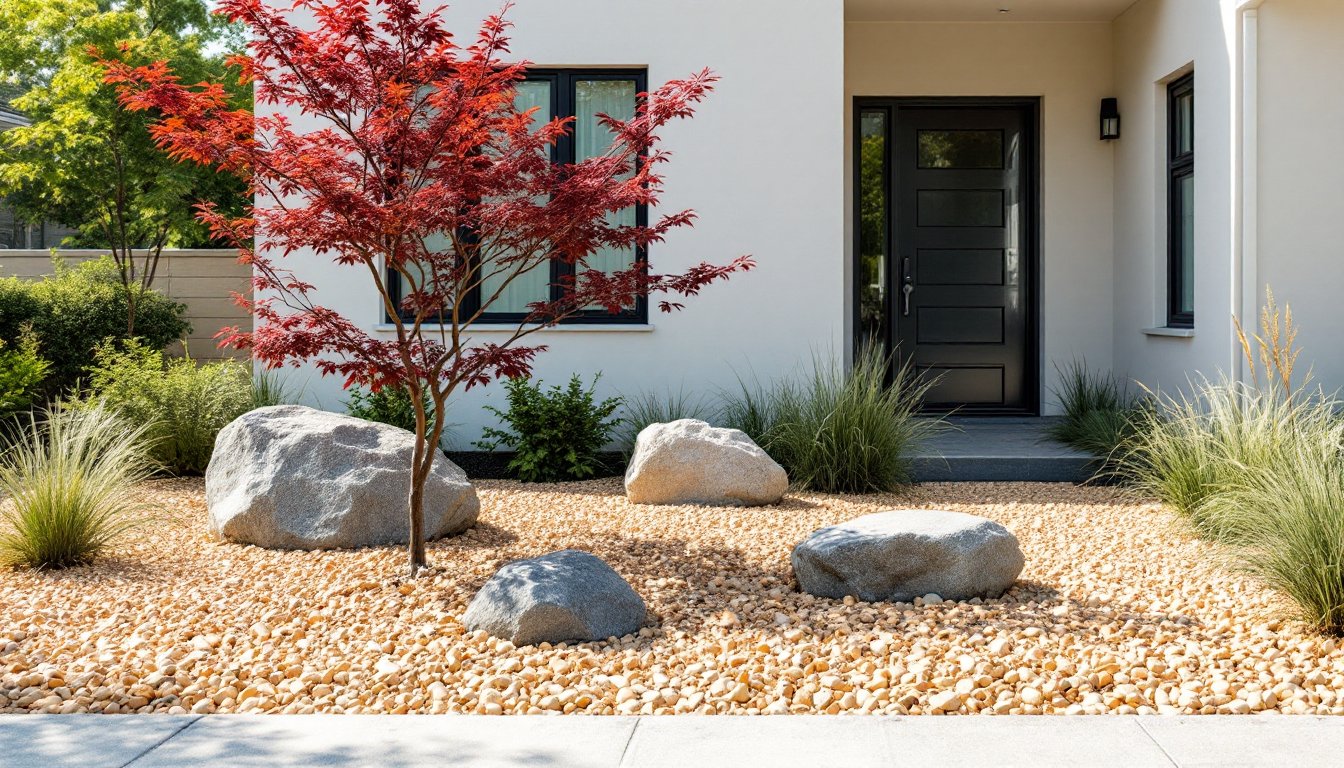
Minimalist rock gardens use clean lines, restrained plant palettes, and generous negative space. The goal is calm and purposeful, not cluttered. Start with a single focal point, maybe a specimen plant like Japanese maple or ornamental grass, positioned off-center. Surround it with smooth river rock in one or two complementary colors. Larger boulders (12-24 inches) ground the composition and create visual weight without requiring plants.
Keep hardscape elements, pathways, edging, or raised beds, to simple geometric shapes. Avoid mixing five different rock types: stick with two or three. A minimalist yard often looks better in grayscale and earth tones rather than multi-colored gravel. The challenge is restraint: the urge to fill every inch with something can overwhelm a minimalist vision. Embrace empty space, it’s part of the design. Companies like The Spruce and Sunset offer inspiration galleries showing how professional designers handle rock and plant spacing.
Xeriscape and Desert-Inspired Designs
Xeriscape, a water-conserving design approach, pairs perfectly with rock landscaping in arid regions. Designers working in the Southwest and high-desert areas have perfected this style: layered rock mulch, drought-tolerant plants (sedums, agaves, cacti, desert rose), and strategic gravel coloring that mimics the natural landscape.
For a desert aesthetic that works anywhere, use warm-toned decomposed granite (DG) or caramel-colored pea gravel as base material, layer in larger desert-colored boulders, and plant resilient perennials like Russian sage, butterfly bush, or ornamental grasses. Hardscape features like river-rock borders and dry creek beds (using larger stones in linear patterns) add movement and visual interest without requiring water or maintenance. This approach has gained popularity because it pairs visual appeal with genuine sustainability. If you’re considering a complete yard overhaul, professional landscape design ideas can help you plan a cohesive vision. For smaller sections or planting concepts, exploring garden ideas provides room-by-room inspiration that translates well to front yard applications.