Table of Contents
ToggleA sloped front yard can feel like a liability, erosion, mowing challenges, water runoff, and the constant battle against gravity making your landscaping work twice as hard. But slope isn’t a curse: it’s an opportunity. With the right design choices, sloped front yards actually become easier to maintain than flat ones. The key is working with the terrain instead of fighting it. This guide covers practical strategies from native plants to hardscaping solutions that’ll transform your slope into a low-maintenance asset that looks intentional and polished from the street.
Key Takeaways
- Low maintenance sloped front yard landscaping succeeds by working with the terrain rather than against it, prioritizing native plants and thoughtful drainage design.
- Native plants with deep root systems—including groundcovers like sedum, native grasses, and spreading shrubs—stabilize soil, reduce erosion, and require far less water and upkeep than conventional turf.
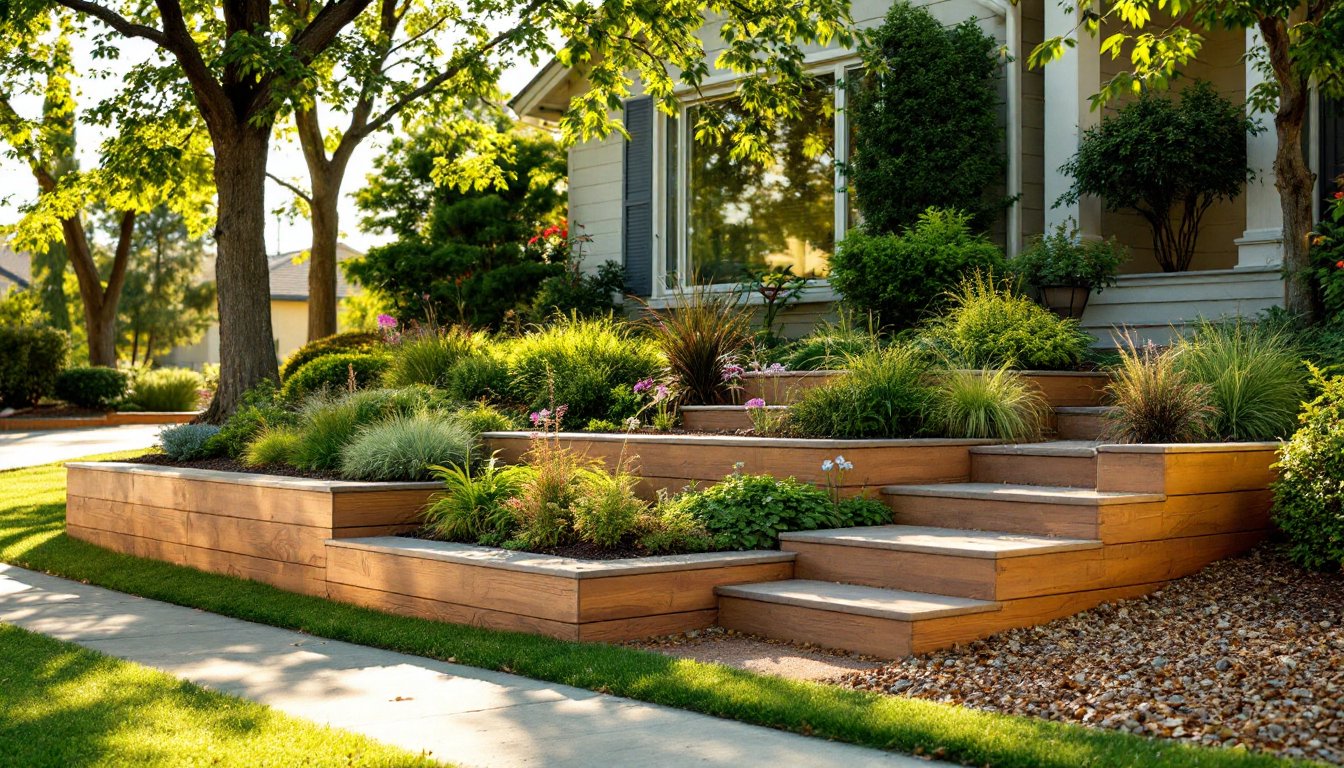
- Strategic hardscaping like low retaining walls (12–24 inches) and berm systems flatten slopes into manageable zones while cutting maintenance demands significantly.
- Inorganic mulch such as river rock lasts 3–5 years on slopes versus 1–2 years for organic mulch, making it the better low-maintenance choice for steep grades when paired with quality landscape fabric.
- Managing water runoff through strategic grading, native plantings, and properly extended downspouts protects both your landscaping investment and your home’s foundation from erosion and water damage.
Why Sloped Yards Require a Different Landscaping Approach
Sloped yards don’t follow the rules of flat landscaping, and that’s exactly why you need to change your strategy. The biggest issue is water management. On a slope, water runs downhill fast, which means topsoil washes away, roots dry out unevenly, and mulch ends up at the bottom of the grade. Conventional turf grass struggles too: mowing a steep slope is dangerous and puts excessive wear on the mower’s blade. The real win comes from accepting the slope and using plants and hardscape that thrive in fast-draining, often-dry conditions.
Soil composition matters more on a slope than on level ground. Heavy clay soils compact and shed water: sandy soils drain so fast that plants get no moisture retention. You’ll want to improve soil structure before planting. More importantly, sloped yards shed snow and ice faster in winter, meaning plants face freeze-thaw cycles and salt exposure that level yards don’t. All of this points to a simple truth: the most low-maintenance sloped yard is one designed to match its drainage and exposure conditions from the start, not one where you’re fighting the terrain with standard landscape techniques.
Native Plants and Ground Covers for Erosion Control
Native plants are the workhorse of low-maintenance slope landscaping. They’re adapted to your region’s water, soil, and light patterns, so they need less fertilizer, fewer waterings, and minimal pruning once established. More importantly, their root systems stabilize soil and reduce erosion far better than ornamentals that haven’t evolved for your climate.
For erosion control on slopes, you need plants with deep, fibrous root networks. Sedum and other groundcovers knit the top layers together and create a living mat that water can’t wash away. Native shrubs with sprawling habits, like bearberry in cold climates or California buckwheat in the West, anchor soil while suppressing weeds and looking intentional rather than weedy.
Native grasses are underrated on slopes. They’re tougher than turf, establish deep roots, and don’t need weekly mowing. Depending on your region, options include inland sea oats (East), little bluestem (Central), or blue grama (Southwest). These stabilize soil, look fine from the street, and let you skip the mower-on-a-slope liability entirely.
Best Plant Choices for Steep Slopes
Choosing plants for steep slopes means prioritizing erosion control and drought tolerance. In northern regions, consider creeping phlox, sedum varieties, and native junipers, all low-growing, deep-rooting, and drought-tolerant once established. In mid-Atlantic and southern zones, native options like wild ginger, coral bells, and autumn fern add texture while holding soil.
For shrub-level coverage, fragrant sumac, silky dogwood, and nannyberry are native choices that spread laterally and stabilize slopes. The Pacific Northwest favors kinnikinnick (bearberry), Oregon grape, and mahonia for their dense root systems and evergreen appeal. When selecting plants, check the mature spread and height, a plant that spreads 3 to 4 feet wide and stays 18 inches tall covers more ground than a 4-foot-tall shrub that spreads 2 feet.
Research from The Spruce consistently recommends spacing groundcovers closer on slopes to prevent bare spots where erosion can start. A practical spacing is 18 to 24 inches apart for plants with mature spreads of 2 to 3 feet. It costs a bit more upfront but eliminates the need for erosion control fabric and constant mulching.
Terracing and Retaining Walls: Structure Without High Maintenance
Terracing transforms a slope into manageable flat-ish zones, dramatically reducing erosion and making maintenance easier. Unlike conventional wisdom that terraces are expensive and time-consuming, thoughtfully designed low terraces require far less upkeep than a continuous slope planted with mixed plantings.
Retaining walls don’t have to be concrete or stacked stone (though those are options). Timber retaining walls using pressure-treated lumber or composite materials are cheaper and fit most suburban aesthetics. If you’re building walls under 4 feet tall on residential property, most jurisdictions don’t require a permit or engineering, though always check local codes. Walls over 4 feet, those on sloped terrain, or those holding back significant soil loads need professional design and often a licensed contractor.
A simpler, low-maintenance approach is a berm or swale system, basically, creating subtle raised and depressed areas to slow water runoff and redirect it across the slope rather than straight downhill. This doesn’t require walls at all, just careful grading and plant placement. Water spreads out, soaks in better, and erosion stops being your biggest headache.
Landscape professionals often recommend combining a single low retaining wall (12 to 24 inches tall) in the steepest section with native plantings above and below it. This gives you a visual break, reduces the overall slope angle, and creates a defined planting zone where plants aren’t fighting a 45-degree grade. The wall pays for itself in reduced maintenance on the flattened zone behind it.
Mulch, Rock, and Hardscape Solutions
Bare soil on a slope invites erosion and weeds. Covering that soil with something stable is essential. Mulch and rock serve this purpose, but they’re not interchangeable, each has different maintenance profiles.
Organic mulch (shredded bark, wood chips) looks natural and improves soil as it breaks down, but it migrates downhill on steep grades, especially after rain. On a true slope, you’ll end up replacing mulch every 1 to 2 years. If you choose organic mulch anyway, use dyed wood chips rather than shredded bark (they stay in place slightly better) and apply it 2 to 3 inches deep in a dense layer, not scattered thinly.
Inorganic options, pea gravel, river rock, decorative stone, don’t degrade or migrate as easily, making them lower maintenance on slopes. The drawback: they don’t improve soil and can actually insulate it, making it hotter and drier. Gravel also tends to scatter into nearby beds and turf areas, requiring edge containment like metal or plastic landscape edging.
Choosing Between Organic and Inorganic Ground Covers
For low-maintenance sloped yards, the math is simple. Organic mulch requires reapplication every 1 to 2 years on a slope: inorganic materials can last 3 to 5 years or longer. If you’re prioritizing absolute minimum maintenance, large river rock (2 to 3 inches) stays put better than pea gravel, suppresses more weeds, and looks intentional when paired with native plants.
A hybrid approach works well: use inorganic mulch (rock or gravel) in the steepest sections where migration is worst, and save organic mulch for flatter terraced areas where it won’t wash away. Pair any ground cover with a quality fabric landscape underlayment rated for 10+ years. This prevents soil from working up through the mulch and mulch from settling into the soil, the primary reason maintenance mulch becomes a yearly chore.
Alternatively, skip loose mulch entirely and use permanent hardscape. Permeable pavers, decomposed granite, or crushed slate create a finished look while allowing water through. Maintenance is basically weeding and the occasional hosing off. Resources like Gardenista outline several durable hardscape solutions tailored to different climates and slopes.
Drainage Considerations for Sloped Front Yards
Drainage on a sloped front yard isn’t just about preventing erosion, it’s about protecting your home’s foundation. Water running downhill has to go somewhere, and if it’s funneling toward your house, you’re setting yourself up for foundation issues, basement leaks, and landscape failure.
First, understand the natural slope direction. Walk your yard after a heavy rain and observe where water collects and where it runs. In most cases, you want slope runoff to move across your front yard (side to side) rather than straight toward the house or street. This is where subtle grading, berms, and strategic planting come into play.
If water is running straight at your foundation, you might need a perforated drain line (also called a French drain or trench drain) to intercept and redirect it. This is beyond basic DIY for most homeowners, it requires digging, grading, and properly sloped drainage pipe. A landscape contractor or drainage specialist can assess whether you need one.
For most residential slopes, though, good plant coverage and thoughtful ground contouring handle drainage adequately. Native groundcovers and grasses slow water movement, allowing infiltration instead of erosion. Mulch layers (organic or inorganic) also buffer rainfall impact and give water time to permeate.
One practical step any homeowner can take: ensure gutters and downspouts direct roof runoff away from the sloped area or downhill in a controlled manner, not dumped at the top of the slope where it channels straight down. Extending downspouts or installing a rain diverter prevents a sheet of water from overwhelming your carefully planted slope during heavy storms. Resources like Country Living offer practical grading tips, though for steeper grades or foundation concerns, a consultation with a landscape contractor is money well spent. Professional grading takes the guesswork out of water management and prevents costly repairs down the road. When you’re working with a steep slope, getting drainage right protects both your landscape investment and your home itself.