Table of Contents
ToggleA cramped backyard doesn’t mean you’re stuck with a bland patch of grass. Even modest outdoor spaces, whether it’s a 10×12 patio corner or a narrow side yard, can become functional, beautiful retreats with smart planning and the right approach. Small backyard landscaping isn’t about fooling the eye with tricks: it’s about making intentional choices with plants, hardscape, and layout that maximize what you’ve got. This guide walks you through the practical steps to assess your space, choose plants that won’t overwhelm a tight footprint, and use hardscaping strategically to create visual interest without clutter.
Key Takeaways
- Assess sunlight, soil type, and drainage before starting small backyard landscaping—spending time observing your space prevents costly mistakes and ensures plants thrive in their conditions.
- Choose dwarf cultivars and multi-season plants like feather reed grass, serviceberry, and sedums to maximize visual interest without overwhelming tight footprints.
- Vertical gardening solutions such as trellises, wall-mounted planters, and espalier training triple your growing area without consuming ground space.
- Balance hardscape and plantings at 30–50% hardscape and 50–70% plantings, and use permeable paving or gravel pathways to prevent pooling while maintaining drainage.
- Raised garden beds filled with quality topsoil and compost blend are game-changers for small yards, offering excellent drainage, soil control, and space efficiency for vegetables and ornamentals.
- Create a focal point—whether a specimen plant, water feature, or seating area—to anchor your design and give the small backyard clear purpose and visual coherence.
Assess Your Space and Set Realistic Goals
Before you buy a single plant or shovel, spend time observing your backyard. Walk it at different times of day and note where the sun hits, most vegetable gardens and flowering plants need at least 6 hours of direct sun, while shade-tolerant options like hostas, ferns, and liriope can thrive in dappled light under trees. Check the soil type by squeezing a handful: clay clumps and feels sticky, sandy soil crumbles instantly, and loamy soil holds together but breaks apart when pressed. Moisture is equally important, does water pool after rain, or does it drain fast? Soil amendments like compost or mulch can improve both extremes, but understanding your starting point prevents costly mistakes.
Measure the space accurately. Use a tape measure or smartphone app to document length, width, and existing features like fences, trees, or utility boxes. Sketch a rough bird’s-eye view on graph paper: this becomes your blueprint. Next, define what you actually want from the space. Is it a quiet reading nook, a place to grow herbs, somewhere to entertain a few friends, or a dog run? Homeowners often try to cram everything into one small area and end up with visual chaos. Choose 2–3 priorities, and build your plan around those. If you want both raised garden beds and a seating area, measure to confirm both fit comfortably without the space feeling squeezed. You can always add features later, but trying to retrofit a crowded layout wastes time and money.
Choose the Right Plants for Small Areas
In tight spaces, plant selection makes or breaks the design. Avoid tall, spreading shrubs like forsythia or common lilacs unless you’re content pruning them regularly, they quickly devour precious square footage. Instead, focus on multi-season interest: plants that offer flowers, foliage color, or structure across different months so the space never looks bare or monotonous.
Small trees and dwarf cultivars are your friends. A Calamagrostis x acutiflora ‘Karl Foerster’ (feather reed grass, 5 feet tall) adds vertical interest without spreading wide. Serviceberry (‘Autumn Brilliance’ is compact at 20 feet) gives spring flowers, summer berries, and fall color. For evergreen structure, Emerald Green Arborvitae stays columnar and reaches 15–20 feet tall but only 3–4 feet wide, perfect for screening or framing a boundary. When choosing flowering shrubs, pick ones that stay under 6 feet tall naturally and bloom for weeks, not days. Butterfly bush (‘Black Knight’ or ‘Blue Chip’) is reliable and blooms July through frost, and dwarf lilac cultivars offer scent without the sprawl.
Perennials and groundcovers round out the palette. Sedums are practically indestructible, they’re drought-tolerant, need little water once established, and flower late into fall. Catmint (Nepeta) attracts pollinators, smells great, and blooms for months if deadheaded. For shade, Coral Bells (Heuchera) offers colorful foliage year-round in burgundy, chartreuse, or deep purple tones, not just when flowering. Layer in a few spring bulbs like tulips or alliums in fall, they take almost no space once they’re done blooming, and the payoff is weeks of color with minimal effort.
Vertical Gardening Solutions
When ground space is limited, think upward. Wall-mounted planters, trellises, and hanging baskets triple your growing area without eating floor space. A simple wooden trellis (available in kits or built from 2×2s and 1×2s) against a fence or wall becomes home to clematis, climbing roses, or pole beans. Install it 6–12 inches out from the wall so vines can weave through: this also allows air circulation to prevent mildew. Espalier, training a fruit tree or ornamental against a flat surface in a grid or fan pattern, is ambitious but transforms a small tree into living wall art while still producing fruit.
Vertical planters and pocket gardens mount directly to walls or fences. These work well for herbs, sedums, strawberries, or shade-tolerant groundcovers like creeping fig. Water them from the top so gravity does the work: in hot climates or full sun, they dry quickly, so check them daily during peak growing season. For renters or those without yard access, tiered plant stands or ladder shelving clustered in a corner provide instant vertical density and can be moved if needed. A wall-mounted herb planter with 8–10 pockets near the kitchen door gives you fresh basil, thyme, and rosemary steps away, saving both space and money.
Smart Hardscaping to Maximize Limited Space
Hardscaping, patios, pathways, raised beds, and edging, is the skeleton of your design. In small spaces, every inch counts, so plan carefully. A cramped walkway makes the area feel cramped: too much paving eliminates planting room. The sweet spot is typically 30–50% hardscape and 50–70% plantings for a residential backyard.
Materials matter. Permeable paving like porous asphalt, permeable pavers, or crushed stone lets water drain instead of pooling and reduces runoff, important in many jurisdictions and better for soil health. Concrete pavers come in various sizes: 12×12 or 16×16 inch pavers are standard and easier to set than large 24×24 slabs in a tight space where you’re cutting a lot of pieces. Lay pavers over a 4-inch crushed stone base compacted with a hand tamper (rent one if needed): this prevents settling and pooling. Wood decking feels warmer and less industrial but requires annual maintenance, sealing or staining every 2–3 years depending on climate, and eventually needs boards replaced. If building a small deck, pressure-treated lumber (rated for ground contact) and galvanized or stainless fasteners prevent rot: standard nails will stain the wood over time.
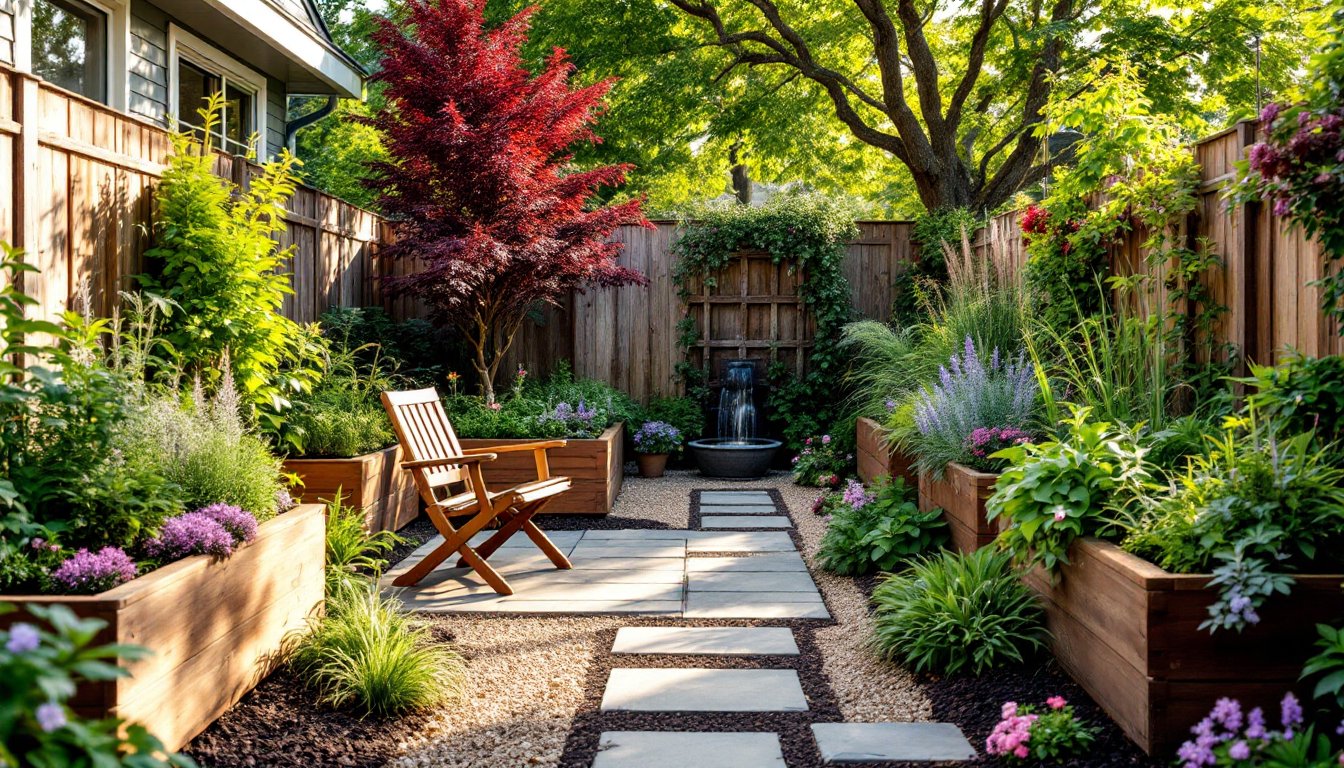
Raised beds are game-changers in small yards. A 4×8×12-inch bed holds enough soil for a vegetable garden or ornamental plantings without monopolizing space. Build them from untreated cedar (naturally rot-resistant and lasts 10+ years), composite lumber, or galvanized steel kits, avoid railroad ties (creosote-treated and toxic to vegetables). Fill with topsoil and compost mix (not garden soil from elsewhere, which compacts): most 4×8 beds need about 32 cubic feet. Raised beds warm up faster in spring, drain well, and you can control the soil quality, making them ideal for herbs or vegetables in small yards.
Paving, Decking, and Ground-Level Design
When space is tight, every surface choice sends a visual message. A large expanse of one material, say, all flagstone, can feel monotonous. Instead, mix two materials: a patio of permeable pavers surrounded by a border of gravel or creeping thyme creates visual breaks and definition without adding visual weight. This also naturally delineates planting zones.
Gravel pathways are cheap ($20–40 per cubic yard) and fast to install, just lay landscape fabric over compacted soil and spread ¾-inch crushed granite or pea gravel 2–3 inches deep. They look intentional and let water through. Downside: you’ll need to rake and replenish gravel annually, and some people track it into the house. If that’s a dealbreaker, permeable pavers or stepping stones set in mulch work well.
For a super-tight footprint, consider a simple stepping-stone path through plantings rather than a wide walkway. This saves space and creates a winding, garden-like feel instead of a stark, utilitarian vibe. Use 6×6 or 12×12 pavers spaced so a person’s stride lands comfortably on each (roughly 24 inches apart center-to-center).
If you’re adding a small seating area, keep it minimal: a bench, two bistro chairs, or a small table. Oversized furniture makes a small space feel cramped and unwelcoming. Pool Landscaping: Transform Your design, even in modest yards, often includes hardscape that anchors the layout and creates functional zones for different activities.
Creating Focal Points and Visual Interest
A small space needs at least one anchor, something that draws the eye and gives the area purpose. Without a focal point, even well-planted yards feel aimless and scattered. Focal points can be living (a specimen plant, tree, or topiary) or hardscape (a water feature, sculpture, or seating area).
Specimen plants are the easiest focal point for DIYers. Choose one plant with visual impact, maybe a Japanese maple with brilliant fall color, a weeping cherry, or even a columnar evergreen with interesting bark texture. Place it where you’ll see it from the house or primary seating area. The plant becomes an anchor that the rest of the design flows around. Alternatively, a small water feature, a birdbath, fountain, or small pondless reservoir, adds sound and movement, attracts wildlife, and feels calming. A simple recirculating fountain kit ($50–200) runs on a low-voltage pump plugged into an outdoor outlet: no digging a pond required.
Containers and potted plants offer flexibility and seasonal rotation. Group 3–5 pots of varying heights in a corner or by the entrance: this massing is more visually striking than scattered single pots. Use a color palette, say, silvery foliage plants in gray ceramic pots, or warm-toned flowers in terra-cotta, to tie the look together. The Spruce and similar resources offer seasonal planting combinations, though you can experiment with what works in your climate.
Vertical elements like arbors, trellises, or pergolas add height and structure without consuming much ground space. A simple 6-foot arbor at the entrance or framing a seating area creates an inviting threshold and defines separate zones. Better Homes & Gardens frequently features small-space designs that lean on vertical structures and layered planting. Climbing vines soften hard edges and create a garden-like feeling even in tight quarters.
Finally, lighting as a design tool is often overlooked. Strategic uplighting on a tree, string lights overhead, or a simple solar stake light down a pathway guides the eye and extends usability into evening. Even modest backyards feel magical with thoughtful illumination.
Lighting and Finishing Touches
Outdoor lighting serves two purposes: function and ambiance. Task lighting (a light above a seating area or pathway) helps you see: ambient lighting (string lights, uplighting, or lanterns) sets mood and extends your evening enjoyment.
Solar lights are the DIYer’s friend, no wiring required. Solar path lights ($2–8 each) charge during the day and glow softly at night: space them 3–4 feet apart along pathways. Solar stake lights work in plantings to highlight focal plants. Downside: they’re dimmer than electric lights and fade if shaded. For brighter, more reliable light, low-voltage LED landscape lighting ($10–30 per fixture, plus a $40–80 transformer) plugs into a standard outlet and uses thin cable buried shallow under mulch or along surfaces. Most systems are plug-and-play, no electrician needed, and LED bulbs last years on minimal power.
String lights (bistro lights or Edison bulbs strung overhead) create instant coziness. Attach them to fence posts, an arbor, or a temporary post: they’re rated for outdoor use but should be taken down or covered in winter in harsh climates. They use more power than solar, so plug them into a GFCI-protected outdoor outlet to prevent electrical hazards.
Finishing details matter in small spaces because they’re always in view. Mulch or bark chips suppress weeds, retain moisture, and create clean lines, use 2–3 inches deep. Edging (plastic, metal, or stone borders) keeps mulch in place and plants defined. Landscape Design Ideas: Transform Your outdoor space often incorporates these foundational elements that tie the whole design together cohesively.
Seasonal refresh is easy in containers and small plantings. Swap in cool-season pansies or ornamental kale in fall, spring bulbs, or summer annuals like zinnias or begonias based on what thrives in your zone. This keeps the space feeling alive and intentional year-round without major overhauls.
A small rain barrel captures runoff and waters plants with free (chlorine-free) water. A basic 50-gallon model costs $80–150 and reduces watering time in dry spells, practical and sustainable. Even tiny touches like garden markers for herbs, a small welcome sign, or a bird feeder personalize the space and show care.