Table of Contents
ToggleA white KitchenAid dishwasher sits at the intersection of form and function, it’s the appliance that makes a visual statement while handling the grunt work of feeding a household. Whether you’re renovating a dated kitchen or building one from scratch, the right dishwasher can anchor your design and save hours each week. This guide walks you through selecting, installing, and maintaining a white KitchenAid dishwasher that’ll actually fit your kitchen, your budget, and your lifestyle. We’ll cover why white models work as design pieces, which ones deliver real performance, how to install one yourself (or know when to call a pro), and what to expect long-term.
Key Takeaways
- A white KitchenAid dishwasher combines design appeal with high-performance cleaning, running at 39–40 dB with robust wash cycles that eliminate the need for pre-rinsing.
- White KitchenAid dishwasher models range from $600–$2,000+ depending on features, with entry-level options delivering solid washing at under $800 and premium models offering smart connectivity and ProScrub technology.
- Successful installation requires verifying your 24-inch cabinet opening, checking plumbing and electrical capacity, and connecting hot water inlet lines with proper sealing to prevent leaks.
- Monthly cleaning cycles with commercial dishwasher cleaner and quarterly gasket maintenance protect your white KitchenAid dishwasher’s long-term performance and prevent mineral buildup in hard water situations.
- White finishes hide water spots and fingerprints better than stainless steel and integrate seamlessly into modern minimalist or farmhouse kitchen designs when paired with appropriate cabinetry and hardware.
- Over a 10-year lifespan, a white KitchenAid dishwasher costs approximately $10–$15 per month in upfront expense plus utilities, making it a cost-effective investment when factoring energy efficiency and durability.
Why Choose A White KitchenAid Dishwasher for Your Kitchen
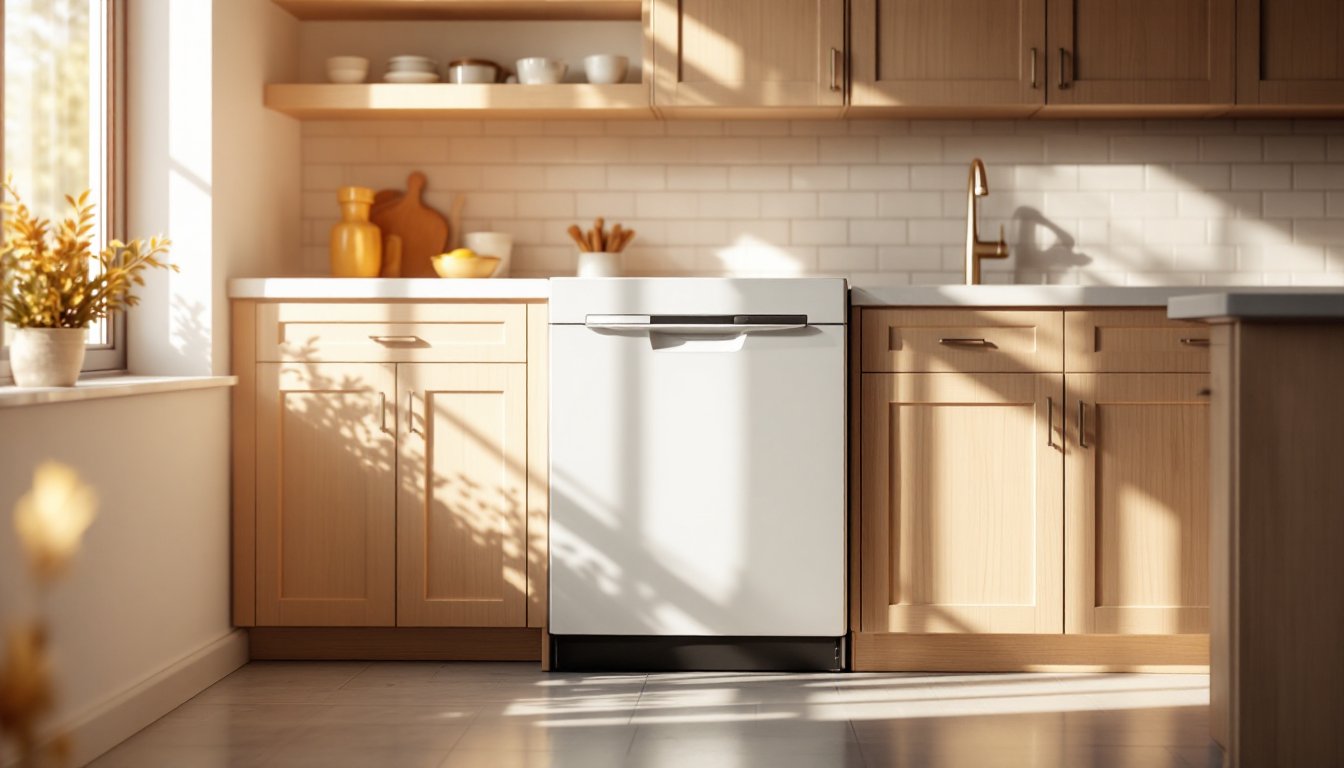
White appliances have moved beyond the realm of sterile, hospital-like kitchens. A white KitchenAid dishwasher works as a design anchor that complements both modern minimalist kitchens and farmhouse aesthetics. It reflects light, making smaller kitchens feel more spacious, and it pairs seamlessly with wood cabinetry, subway tile, or open shelving.
Beyond aesthetics, KitchenAid dishwashers are built on a reputation for robust washing cycles and quiet operation. Most models run at 39–40 dB, which is quiet enough that you won’t hear it from the living room. The brand focuses on deep-clean performance, their wash arms and filtration systems are engineered to handle stuck-on food without requiring a pre-rinse, which saves time and water.
A white finish also hides water spots and fingerprints better than stainless steel, especially if you have hard water or kids touching every surface. It’s a practical choice for households that want the look without the constant polishing.
Top White KitchenAid Dishwasher Models and Features
KitchenAid offers several white dishwasher lines, ranging from mid-range to premium. Entry-level models start around $600–$800 and include essentials like multiple wash cycles, soil sensors, and stainless-steel tubs. Mid-range units ($900–$1,200) add features like a third rack, adjustable racks, and quieter operation. Premium models ($1,500+) offer smart connectivity, specialized cycles for glass and delicate items, and ProScrub technology, which uses targeted jets to tackle baked-on food.
Look for models with adjustable upper and lower racks, this flexibility matters if you’re washing large pots or hotel pans alongside everyday dishes. ProWash cycles detect soil levels and adjust water and heat accordingly, cutting energy use when the load is light. The soil sensor is worth mentioning: it measures turbidity (cloudiness) in the wash water and extends or shortens the cycle based on how dirty the water gets.
When shopping, according to the best dishwashers reviewed by top testing labs, KitchenAid models consistently rank high for drying performance and noise levels. Check the Energy Star rating, it tells you water and energy consumption per cycle, and can matter over a 10–year lifespan.
Installation Tips and Best Practices
Installing a white KitchenAid dishwasher yourself is doable if you’re handy and comfortable working with plumbing connections. Know your limits upfront: if you don’t have a water line running to the dishwasher location, or if your electrical circuit doesn’t support a dedicated 120V outlet, hire a licensed plumber or electrician, don’t improvise here.
Assuming the rough-in (plumbing and electrical) is already done, you’ll need a few basics: an adjustable wrench, hose clamps, Teflon tape (for threaded connections), and a bucket to catch any residual water. Most white KitchenAid models are standard 24-inch width (nominal: actual cutout is approximately 23.75 inches), so verify your opening. Slides or adjustment rails come pre-installed: your job is to fit the unit into the gap, level it front-to-back and side-to-side using the adjustable legs, and secure it to the countertop and cabinet sides with stainless-steel screws.
Connect the inlet water line to the hot water supply, not cold: KitchenAid defaults to hot water for better cleaning, and tighten with a wrench. Wrap the threaded inlet connector with two layers of Teflon tape to prevent leaks. Connect the drain line to a standpipe or dispose-all outlet (if you have one) using a hose clamp. Run a short test cycle with the door open and a towel underneath to catch drips before you close up the cabinet. If water leaks anywhere, shut off the supply immediately and re-seal the connection.
Maintenance and Care for Long-Lasting Performance
A white KitchenAid dishwasher will outlast cheaper units if you treat it right. Run a monthly clean cycle (many models have a dedicated button) using a commercial dishwasher cleaner, this dissolves mineral deposits and grease inside the pump and spray arms. Every six months, remove and rinse the lower filter basket under running water: food particles and debris clog it over time.
Check the door gasket (the rubber seal around the opening) quarterly. It traps food particles and detergent residue, which can dry out the rubber. A damp cloth and mild soap keep it clean and pliable: if it hardens or cracks, replacement gaskets cost $50–$100 and take ten minutes to swap out.
Use rinse aid in the dispenser, even if you’re using all-in-one detergent pods. Rinse aid doesn’t replace detergent: it helps water sheeting off dishes and reduces spotting and filming. A single fill lasts 3–4 months for a typical household. Hard water demands more attention, if you see white buildup on glassware after every cycle, your water likely exceeds 180 ppm of minerals, and you should run a cleaning cycle more often or consider a whole-house softener. The stainless-steel tub handles hard water fine: the issue is aesthetic and mineral scale on dishes.
Cost Considerations and Budget Planning
A white KitchenAid dishwasher ranges from $600 to $2,000+ depending on features and capacity. Entry-level models give you the brand’s reputation and solid washing for under $800. If you’re replacing an older dishwasher and the cabinet opening and plumbing are already in place, labor costs are minimal if you DIY: hiring a plumber or installer adds $150–$300.
Factor in installation accessories: a new inlet hose (if the old one is corroded or cracked) costs $15–$30. Teflon tape, hose clamps, and fasteners are under $20 total. If electrical isn’t available at the location, running a dedicated circuit by a licensed electrician runs $200–$500 depending on distance and existing wiring.
Over a 10-year lifespan, a white KitchenAid dishwasher costs about $10–$15 per month in upfront expense plus utilities. That breaks down to roughly $3–$5 per wash cycle. Service calls for repairs (outside warranty) average $150–$200 for diagnostics plus parts: compressors and motors are expensive replacements ($300–$600), so buying a model with a strong warranty or considering extended coverage matters if budget is tight.
Design Integration: Making Your Dishwasher a Kitchen Statement
A white dishwasher works as either a visual anchor or a background player, depending on your kitchen style. In a modern kitchen with flat-panel cabinetry and minimal hardware, a white dishwasher blends seamlessly and lets countertops or backsplash take center stage. In farmhouse or cottage kitchens, white appliances pair with open shelving and vintage hardware to create a cohesive look.
Control panel design matters for integration. Some white KitchenAid models feature a recessed or touch-control panel that sits flush with the door face, creating a streamlined silhouette. Others have raised control buttons, useful for visibility and tactile feedback, but visually busier. If your white dishwasher is visible (not tucked between base cabinets), the panel style affects how it reads in the room.
Consider the door edge: some models offer integrated cabinet panels (sold separately) that match your cabinetry, essentially making the dishwasher disappear into the run of cabinets. This costs $100–$200 extra but creates a unified look. If budget doesn’t allow for panels, keeping the white finish bright and clean, wipe it down weekly with a soft, damp cloth, ensures it reads as an intentional design choice, not a dated relic. Pair it with white or cream tile, shaker-style cabinetry, or open shelving for visual harmony.
Conclusion
A white KitchenAid dishwasher delivers on both design and performance, making it a smart choice for homeowners who want a kitchen that looks intentional and functions without fuss. Whether you’re installing one yourself or hiring help, starting with accurate measurements, understanding your plumbing and electrical setup, and choosing a model that matches your washing needs ensures you’ll get years of reliable service. Factor in the total cost of ownership, maintain it quarterly, and treat it as part of your kitchen’s design language rather than a purely utilitarian box. Done right, it becomes the appliance you actually look at.