Table of Contents
ToggleYour front yard is the opening statement of your home. Whether you’re prepping to sell, boosting neighborhood pride, or simply tired of looking at an uninviting landscape, curb appeal landscaping delivers measurable returns, both financially and emotionally. The good news? You don’t need a landscape architect’s budget or a contractor’s crew to make a meaningful transformation. With smart planning, practical plant choices, and strategic hardscape upgrades, most homeowners can tackle curb appeal projects over a season or two. This guide walks you through the priorities, from clean edges to plant selection, with budget-friendly wins and honest talk about when to call in pros.
Key Takeaways
- Front yard curb appeal landscaping can increase home resale value by 5–10% while improving your daily quality of life and neighborhood presence.
- Start with clean edges and defined beds using a landscape edger, refresh mulch to 2–3 inches depth, and prune strategically—these fundamentals cost minimal money but deliver maximum visual impact.
- Choose hardy, well-suited plants layered by height (tall evergreens in back, mid-height shrubs in middle, low perennials in front) to create year-round visual depth with minimal maintenance demands.
- Strategic hardscape upgrades like clear walkways, permeable pavers, and low-voltage LED lighting add structure and sophistication without ongoing plant maintenance.
- Quick budget-friendly wins—fresh door paint, container plantings, mulch refresh, and lawn cleanup—deliver outsized returns in a single season and often cost under $500.
Why Curb Appeal Matters More Than You Think
Curb appeal isn’t just about aesthetics. Real estate data consistently shows homes with well-maintained front yards sell faster and often command higher prices, sometimes 5–10% more depending on your market. But it goes beyond resale value. A thoughtfully landscaped front yard improves your daily quality of life: you’ll feel pride pulling into your driveway, your home becomes a neighborhood draw rather than an eyesore, and you’re more likely to spend time outside.
The psychology is simple. First impressions stick. A home with defined planting beds, healthy greenery, and tidy edges signals that the owner cares about maintenance and detail. Conversely, overgrown shrubs, bare patches, and eroded beds suggest neglect, even if the roof is solid and the wiring is new.
Starting a curb appeal project also forces you to address maintenance issues early. Fixing a broken gutter, trimming dead branches, and replanting struggling specimens prevents small problems from becoming expensive repairs later. Think of front yard work as preventive medicine for your home’s exterior.
Start With Clean Lines and Defined Edges
Before you plant a single shrub, clean up what’s already there. Remove dead plant material, prune overgrown branches, and edge your beds. Clean lines are to landscaping what primer is to painting, essential groundwork that makes everything else look intentional.
Edging basics: A crisp edge between lawn and bed transforms a space instantly. Use a landscape edger or spade to cut a clean, 3–4 inch-deep line along bed perimeters. For a long driveway or walkway edge, a power edger saves your back and delivers consistent depth. Budget roughly $150–300 for a mid-range corded edger if you plan to maintain it annually.
Mulch and spacing: Once beds are edged, refresh mulch. Two to three inches of quality mulch (cedar, hardwood, or shredded bark) suppresses weeds, retains moisture, and gives beds a finished look. Avoid piling mulch directly against tree trunks, this promotes rot and invites pests. Leave 3–4 inches of air space around the base. For a typical 300–400 square-foot front landscape, expect to use 3–5 cubic yards of mulch.
Pruning priorities: Remove any dead or diseased branches, and trim shrubs that overhang walkways or windows. Most foundation shrubs benefit from a light pruning to maintain shape, not a drastic hack. If you’re uncertain about pruning a mature tree or specimen shrub, hire an arborist for $200–500: mistakes here are costly and slow to recover.
Choosing Plants and Trees That Elevate Your Landscape
Plant choice makes or breaks curb appeal. Healthy, well-suited specimens require less maintenance and deliver year-round visual interest. Poor choices, think spindly trees, plants that outgrow their space, or species that wilt in your zone, look rough within a season.
Hardiness and site conditions: Start by understanding your USDA hardiness zone, sunlight exposure, and soil type. A native shrub thriving in full sun will languish in shade: a moisture-loving plant will rot in well-drained sandy soil. Research on The Spruce and Gardenista provides excellent plant care guides tailored to region and condition. Your local cooperative extension also offers free advice.
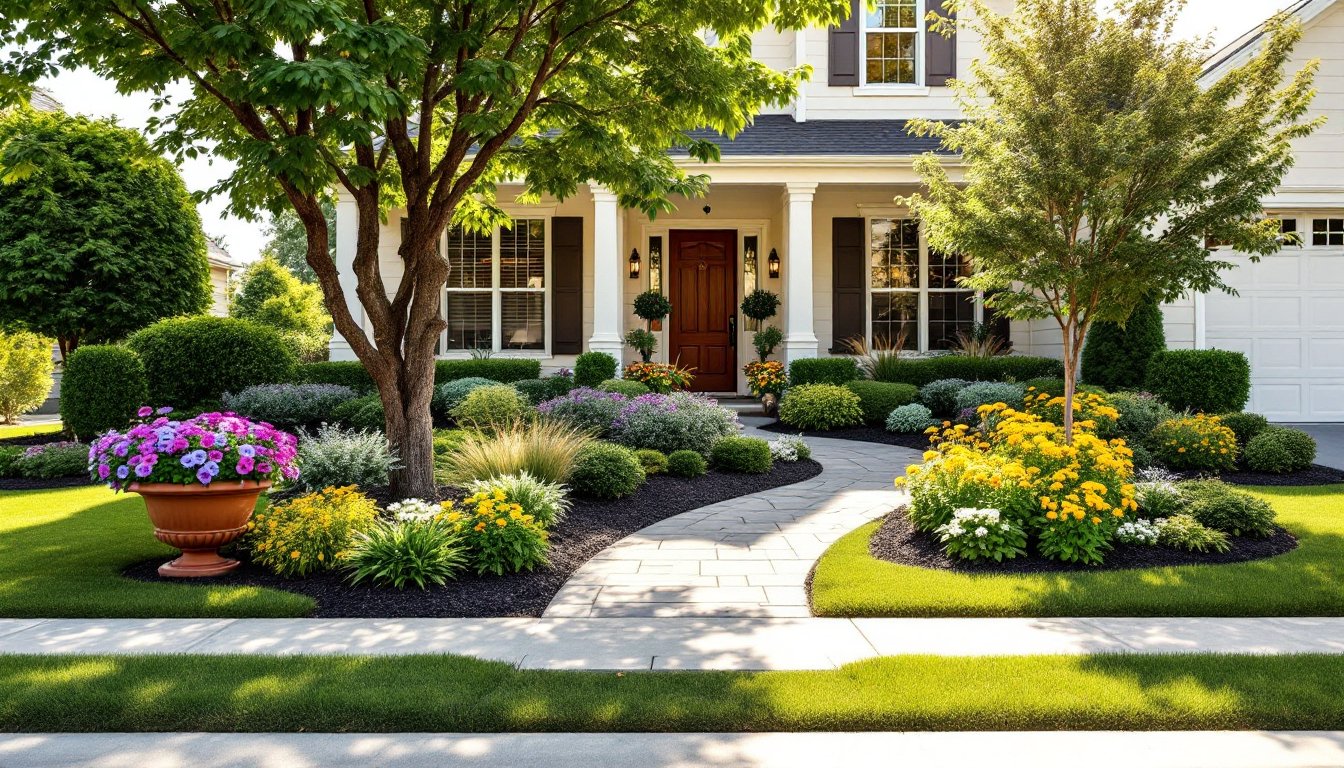
Layering for visual depth: Landscape designers use layering: tall evergreens or small trees in the back, mid-height shrubs in the middle, and low perennials or groundcover in front. This creates dimension and frames your home. For a modest 20-foot-wide front elevation, consider one focal tree (such as a Japanese maple or crape myrtle for color and form) and three to five shrubs of varying heights.
Low-maintenance selections: Dwarf conifers, ornamental grasses, hydrangeas, and native shrubs are forgiving choices. Boxwood, juniper, serviceberry, and viburnum tolerate neglect better than fussy perennials. Mix in flowering plants for seasonal pops, coneflowers, black-eyed Susans, or ornamental sage thrive with minimal fussing and attract pollinators.
Seasonal interest: Plant for year-round appeal. Evergreens provide winter structure, flowering shrubs offer spring color, grasses peak in fall, and persistent seed heads or berries add winter texture. This layering keeps your landscape looking intentional even in dormant months.
Hardscape Elements That Make an Impact
Hardscape, pavers, stone, gravel, edging, provides structure and defines spaces. Strategic hardscape upgrades elevate curb appeal without the maintenance demands of extensive plantings.
Walkways and entry: A clear path from driveway or street to your front door signals that visitors are welcome. If you have a crumbling concrete path, upgrading to pavers, stepping stones, or even resurfacing the existing slab pays dividends. Pressure-wash existing hardscape first, often grime is the real culprit, not wear. A DIY pressure washer rental costs $60–100 for a day.
Material choices: Concrete is budget-friendly and durable but plain. Permeable pavers, stone, or composite materials add character and cost more upfront ($8–15 per square foot installed) but look richer. For a modest 4-foot-wide, 20-foot-long walkway, budget $600–2,400 depending on materials and whether you hire labor.
Focal hardscape: Consider a small patio or seating area visible from the street. Even 8×8 feet of pavers creates a gathering spot and suggests that the home’s exterior is well-maintained and welcoming. If that’s beyond your budget, a simple gravel surround around a seating area (a bench and two planting pots) costs $100–300 and reads as intentional.
Lighting and hardware: Low-voltage LED landscape lighting ($30–80 per fixture) highlights architectural features, illuminates pathways, and adds sophistication. Well-chosen house numbers, a mailbox upgrade, or new entrance hardware ($50–300 total) are small touches that signal attention to detail.
Quick Wins: Budget-Friendly Upgrades for Instant Results
Not every curb appeal improvement requires months of planning or thousands of dollars. Some fixes deliver outsized returns with minimal effort.
Paint and refresh: A fresh coat of exterior paint, new shutters, or a stained front door transforms perception immediately. Budget $200–500 for DIY door stain or paint: $2,000–5,000 for professional house painting. New house numbers or a mailbox ($30–150) are tiny touches that catch the eye.
Container plantings: Oversized pots with seasonal flowers flanking a porch or entry add polish and color. Three to four large containers ($15–40 each) planted with annuals or evergreen shrubs ($5–15 per plant) costs $100–200 and refreshes instantly. Swap plants seasonally for continuous appeal, as suggested in Country Living‘s seasonal gardening tips.
Lawn and edge detail: Rake out thatch, aerate compacted soil, and overseed thin patches. Healthy turf makes everything else look better. A DIY aeration machine rental ($50–75) and quality seed ($0.50–$1.50 per pound) cost $100–200 for a typical front lawn and deliver results in 4–6 weeks.
Mulch refresh: Replacing tired mulch in beds is perhaps the quickest visual win. New mulch costs $3–6 per cubic yard: a typical front landscape needs 3–5 cubic yards. For $20–30, you get a completely refreshed look.
Pruning and cleanup: An afternoon trimming overgrown shrubs, removing dead plant material, and sweeping leaves looks like a five-figure landscape upgrade to passersby. This is sweat equity at its finest.
Conclusion
Front yard curb appeal isn’t a single project, it’s a series of thoughtful choices that compound over time. Start with the fundamentals: clean edges, appropriate plants, and a tidy overall appearance. Layer in hardscape and accents as budget and time allow. The key is consistency: a landscape looks polished when every element serves a purpose and maintenance stays current. Most homeowners see meaningful returns in the first season, and with ongoing care, you’ll enjoy a front yard that welcomes you home and impresses everyone else.