Table of Contents
ToggleIndianapolis homeowners face a persistent challenge that many don’t even realize is affecting their homes, appliances, and daily comfort: hard water. If you’ve noticed white mineral buildup on your faucets, soap that doesn’t lather well, or a dull finish on your dishes, you’re dealing with one of the Midwest’s most common water quality issues. A water softener in Indianapolis isn’t a luxury, it’s a practical investment that can save thousands in appliance repairs and improve everything from your skin to your laundry. This guide walks you through what you need to know about choosing, installing, and maintaining a water softening system for your home.
Key Takeaways
- Hard water in Indianapolis (15-25+ GPG) reduces water heater efficiency by 15–25%, shortens appliance lifespan, and causes mineral buildup in pipes and fixtures.
- Ion exchange (salt-based) water softeners are the most effective for true softening and cost $500–$2,500, while salt-free systems are lower maintenance but less effective at creating softer water and lather.
- A water softener installation requires proper sizing based on daily water usage and hardness level; undersizing causes frequent regeneration while oversizing wastes water and salt during the regeneration cycle.
- DIY installation is manageable for comfortable homeowners but requires essential components like a bypass valve and proper drain line slope—many failures occur when these are skipped.
- Professional water softener installation in Indianapolis costs $1,200–$3,500 total and breaks even in 3–5 years through utility savings and extended appliance life, making ownership smarter than long-term rentals.
- Monthly salt refills (50–100 lbs every 6–8 weeks) and occasional resin cleaning every 5–10 years keep ion exchange systems running efficiently with minimal maintenance.
Why Indianapolis Homeowners Need Water Softeners
Understanding Hard Water Problems in the Indianapolis Area
Indianapolis sits in an area with notably hard water, typically ranging from 15 to 25+ grains per gallon (GPG), well above the 60 mg/L threshold the USDA considers “hard.” This hardness comes from dissolved minerals, primarily calcium and magnesium, that accumulate as water moves through limestone and chalk deposits common in Indiana soil.
The effects hit your wallet first. Hard water reduces water heater efficiency by 15–25%, forces you to use more soap and detergent, and dramatically shortens the lifespan of appliances like dishwashers and washing machines. Plumbing fixtures accumulate scale buildup that restricts water flow, and that white, crusty residue isn’t just ugly, it’s a sign minerals are coating the inside of your pipes and appliance internals too.
Beyond the practical damage, hard water affects personal comfort. It leaves your skin feeling dry, makes hair dull and brittle, and can aggravate conditions like eczema. Your clothes fade faster and feel stiff even after washing. If you’ve moved to Indianapolis from a softer-water region, you’ve probably noticed the difference immediately.
The good news: installing a water softener solves these problems. A properly sized system removes the minerals responsible for hardness, protecting your home’s plumbing, appliances, and your own comfort. Most Indianapolis homeowners report noticeable improvements within the first week, better lather in the shower, shinier dishes, and softer laundry.
Types of Water Softeners for Your Indianapolis Home
Choosing the Right System for Your Needs and Budget
Water softeners come in three main types, each with trade-offs in cost, space, and maintenance.
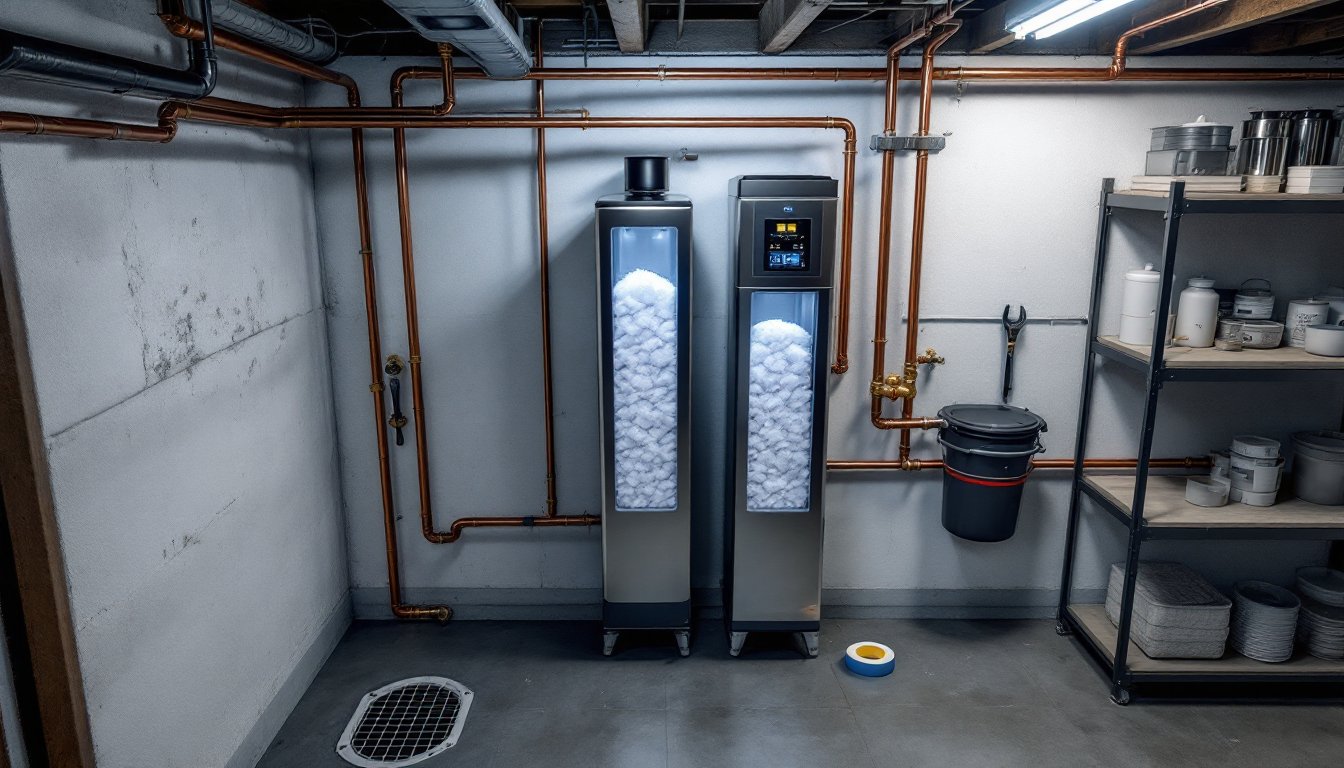
Ion Exchange (Salt-Based) Softeners are the most common and effective. They swap calcium and magnesium ions for sodium (or potassium, at higher cost). A typical system includes a resin tank, a brine tank for regeneration salt, and a control head. Costs range from $500–$2,500 for the unit, plus $100–$300 for installation if you’re doing it yourself or hiring help. The catch? You’ll need to add 50–100 lbs of salt every 6–8 weeks, depending on water hardness and household size. If you have a large household or extremely hard water, budget accordingly. These systems are highly efficient and work well in most Indianapolis homes.
Salt-Free (Condition-Based) Systems use a different technology, typically template-assisted crystallization (TAC) or catalytic carbon, to prevent minerals from adhering to pipes and appliances rather than removing them. They cost $400–$1,200, require minimal maintenance, and eliminate the salt-refill chore. But, they’re less effective at truly “softening” water: they’re better at preventing scale buildup. If you want soap lather and noticeably softer water on your skin, these don’t deliver the same results as ion exchange.
Dual-Tank Systems use two resin tanks that alternate during regeneration, ensuring soft water is always available. They cost significantly more ($2,000–$5,000) but work well for large households or homes with high water demand. For most Indianapolis homes, a standard single-tank system is sufficient.
When sizing your softener, calculate your daily water use in gallons and multiply by your water hardness in GPG. A family of four using roughly 300–400 gallons per day in hard water (15–20 GPG) typically needs a system with 32,000–48,000 grain capacity. Undersizing means frequent regeneration and salt refills: oversizing wastes water and salt during regeneration. Your water supplier can test hardness for you, or you can use a home improvement cost estimators to get baseline guidance on local water conditions and typical system recommendations.
Installation and Maintenance Tips for DIY Homeowners
Installing a water softener yourself is manageable if you’re comfortable with basic plumbing. Here’s what you need to know before you start.
Location matters. Choose a spot where the unit can drain easily, typically near a floor drain, utility sink, or sump pump. Basements or utility closets work well. You’ll also want access for refilling the salt tank and servicing the unit. Avoid areas prone to freezing: water and salt brine can’t be exposed to temperatures below 50°F for extended periods.
Tools and Materials: You’ll need an adjustable wrench, Teflon tape, a hacksaw or PVC cutter, slip-nut pliers, and possibly a bypass valve kit (included with most systems). Have ¾-inch copper or PVC water lines ready, along with adapters that match your existing plumbing.
The basic process is straightforward: shut off the main water supply, cut into the cold-water line between the meter and your first fixture (usually after your water heater), and connect the softener’s inlet and outlet lines using slip couplings. Install the bypass valve so you can isolate the softener for maintenance or repairs without losing water to the house. Drain lines run to a floor drain or ejection sump: most systems regenerate at night and use 40–50 gallons of water during the cycle.
A crucial tip: Many DIY installations fail because people skip the bypass valve or don’t slope drain lines properly, causing backups. Also, pressure-test your connections with the water on before you walk away: low-pressure drips often don’t show up immediately but can cause damage over weeks.
Maintenance is simple. Check salt levels monthly and refill as needed, most tanks hold 100–150 lbs and last 6–8 weeks. Monitor your softener’s regeneration cycle (usually set by the control head: check your manual). Every 5–10 years, the resin may need cleaning with a commercial resin cleaner to remove iron or mineral buildup. If hardness returns even though a full salt tank, the resin is likely exhausted and the tank needs replacement (around $300–$600).
If DIY plumbing isn’t your comfort zone, hiring a plumber for the rough-in ($200–$400 labor) while you handle the rest is a reasonable middle ground. Before committing, watch your softener’s installation video and be honest about your skill level.
Finding Reliable Water Softener Services in Indianapolis
If installation or maintenance isn’t your DIY forte, Indianapolis has no shortage of water treatment professionals. The trick is finding a trustworthy one.
Start with referrals. Ask neighbors, your water utility, or local plumbers for recommendations. Word-of-mouth still beats online reviews for trades work. Once you have candidates, get at least three written quotes that specify the softener model, tank capacity, installation scope, and warranty.
Watch for red flags. Anyone who refuses to test your water hardness before recommending a system size is guessing. Legitimate companies offer a water test (sometimes free, sometimes $20–$50) as part of the consultation. Avoid contractors who pressure you into the biggest or most expensive system: they should right-size based on your home’s actual needs.
Warranty and service terms matter. Quality softener units come with 5–10 year warranties on the tank and 2–5 years on the control head. Ask what’s covered, salt-related issues? Resin replacement? Travel fees? A company offering lifetime support for maintenance calls is a good sign. Indianapolis has seasonal water variations, so a service partner who adjusts your system annually is valuable.
Platforms like Angi and Today’s Homeowner can help you vet contractors, though always confirm references directly. Local water treatment companies often have better knowledge of Indianapolis’s specific water issues than national chains, though both can be reliable.
Cost-wise, expect to pay $1,200–$3,500 for a mid-range softener plus professional installation. Rental plans (common in some areas) run $40–$60 monthly but lock you into a contract. Owning is usually smarter long-term: you’ll break even in 3–5 years and keep the system.
Conclusion
Hard water is a fact of life in Indianapolis, but it doesn’t have to dictate how your home functions or how you feel. A properly sized and maintained water softener, whether you install it yourself or hire a professional, pays for itself through lower utility bills, longer appliance life, and improved comfort. The key is starting with a water test, choosing the right system type for your household, and committing to basic salt or maintenance as needed. Your home, your appliances, and your morning shower will thank you.